Haddock
Melanogrammus aeglefinus
Last updated 16 May 2026
The Scottish fish and chip shop default (never, ever cod in the east of Scotland), and the base of proper Arbroath Smokies and Cullen Skink. North Sea haddock stocks are now MSC-certified sustainable, making it one of the smarter white fish choices.
At a glance
North Sea haddock has recovered from previous overfishing and is now MCS 2–3 — a reasonable choice. Look for MSC-certified haddock for the most reliable indication of responsible sourcing.
Best choice: MSC-certified North Sea haddock from a reputable supplier. The standard for responsible white fish.
Avoid: Avoid Scottish "haddock" of unclear origin (often imported pollock or coley mislabelled). Avoid haddock from depleted Atlantic stocks (Iceland-only).
Seasonality
Compare every Scottish species month by month in the seasonal seafood calendar.
Best quality: Haddock is excellent year-round. Cold-water haddock (September–March) is firmer and slightly sweeter than summer fish.
Best value: Stable pricing year-round. Smoked haddock (Finnan or Arbroath Smokie) is a bit pricier than fresh but more flavourful.
Frozen: Frozen haddock fillets are decent for fish pie or curry. Fresh is dramatically better for fish and chips or pan-frying.
How to buy
- Bright, clear eyes (whole fish)
- Firm, white-pink flesh that springs back when pressed
- Smell of clean sea — never sharp or fishy
- Translucent rather than dull flesh
- No browning or yellowing on cut surfaces
- Cloudy or sunken eyes (whole)
- Soft, watery, or browning flesh
- Strong fishy or ammonia smell
- Fillets labelled vaguely as 'white fish' (could be cheaper substitutes)
- Pale yellow 'smoked haddock' that's been dyed (look for naturally smoked)
Fresh vs frozen: Fresh is best for fish and chips. Frozen at sea is acceptable for fish pie or curry. Smoked haddock is widely available and excellent.
Where to buy
Supermarkets: Excellent supermarket availability. Tesco, Sainsbury's, Waitrose, Morrisons all stock fresh and smoked haddock year-round at £10–14/kg fresh and £15–20/kg smoked. Look for MSC certification.
How much to buy
A medium haddock fillet is around 180–220g — perfect for one person. Smoked haddock yields slightly less per kg as it loses some moisture.
Storage
Fridge: Cook within 1–2 days of purchase. Smoked haddock keeps slightly longer (3–4 days) due to the smoke preservation.
Freezer: Up to 3 months frozen. Pre-portion before freezing for easy weeknight cooking.
Thawing: Thaw in fridge overnight. Pat dry before cooking.
How to prepare
Run your finger along the fillet to find pin bones. Remove with tweezers. Most pre-filleted supermarket haddock is pin-boned but check.
Wet fish steams instead of frying. Pat haddock dry with kitchen paper before any pan-cooking.
For fish and chips and pan-frying, skin-on is often better — it crisps. For curry, fish pie, and poaching, skinless is fine.
Salt draws moisture out — only salt right before cooking, never earlier.
- →Bone fillets carefully — haddock has soft pin bones that hide easily
- →If pan-frying, score the skin to prevent curling
- →Smoked haddock should never need extra salt
Prep time: 5 minutes for filleted haddock. 15 minutes if filleting a whole fish.
Cooking methods
Beer-batter (250g flour, 250ml cold beer, salt). Heat oil to 180°C. Dip seasoned fillet, fry 6–8 minutes until golden. Drain on paper.
The Scottish classic. Worth doing properly at home occasionally.
Pat dry. Hot pan with butter and oil. Lay fillet skin-down. Cook 3–4 minutes until skin crisp. Flip, 1 minute. Lemon, parsley, serve.
Quick weeknight dinner.
Bring milk to a gentle simmer with bay leaf and peppercorns. Add smoked haddock fillets. Poach 8 minutes until just flaking. Serve with poached egg.
Cullen skink. Smoked haddock with poached egg on toast.
Layer haddock, leeks, prawns in a baking dish. Cover with cheesy béchamel. Top with mashed potato. Bake at 200°C for 30 minutes.
A proper Scottish fish pie. Crowd pleaser.
- Overcooking — haddock dries out fast. 4 minutes per cm thickness is the rule.
- Buying dyed bright-yellow 'smoked haddock' — naturally smoked is paler
- Using haddock for sushi or raw — it's a cooked-only fish
- Removing the crispy fried skin in fish and chips — half the appeal
Recipes
Cullen Skink
- · 500g smoked haddock (undyed)
- · 500ml whole milk
- · 1 large potato (diced)
- · 1 onion (chopped)
- · 30g butter
- · 1 bay leaf
- · Handful of parsley (chopped)
- · Sea salt and black pepper
- Sauté onion in butter for 5 minutes until soft.
- Add potato, milk, and bay leaf. Simmer 15 minutes until potato is tender.
- Add smoked haddock and poach for 5–8 minutes until flaking.
- Remove haddock, flake, and return to pot.
- Discard bay leaf. Stir in parsley, season generously.
- Serve with crusty bread.
Use undyed natural-smoked haddock — bright-yellow dyed haddock taints the broth.
Pairs with: Sancerre or a Scottish dry white
Beer-Battered Haddock
- · 2 haddock fillets (about 200g each)
- · 250g plain flour
- · 250ml cold beer (lager)
- · 1 tsp salt
- · Vegetable oil for frying
- · Lemon wedges
- · Sea salt to finish
- Heat oil to 180°C in a deep pan.
- Whisk flour, beer, and salt to a smooth batter (lumpy is fine for haddock).
- Pat haddock dry. Dust lightly with flour.
- Dip in batter, lower into hot oil. Fry 6–8 minutes until golden.
- Drain on kitchen paper. Salt immediately.
- Serve with chips and lemon wedges.
Cold beer makes the lightest batter. The crispness lasts roughly 2 minutes — eat immediately.
Pairs with: A crisp pilsner or a Scottish saison
Protected in law
- Arbroath Smokies is a registered Protected Geographical Indication (PGI). A product cannot be sold under that name unless it meets the registered specification.
Cook it in
Scottish dishes haddock belongs in, and why.
Cullen Skink Recipe: What It Is and Why It Beats Chowder
Smoked haddock is the base of Cullen skink. The dish is named for the Moray fishing town and the fish is not a substitutable ingredient — it carries the whole flavour.
Arbroath Smokies: What They Are, How to Eat Them, and Why the Name Is Protected
Hot-smoked and sold ready to eat — the Angus preparation of haddock, and one of the few Scottish food names protected in law.
Serve with
Haddock and chips with mushy peas and tartare sauce is a Scottish institution. Don't overthink it.
Drink pairings
Haddock is mild and versatile — pair with whatever the rest of the dish suggests, not the fish.
Nutrition per 100g
Excellent lean protein. Low fat, very high protein, rich in selenium and B vitamins. One of the leanest mainstream fish.
Allergen
Haddock is a fish. Contains: Fish. Smoked haddock (e.g. Arbroath smokies, undyed naturally-smoked fillets) may contain added salt — check labels for dietary needs. Cured/smoked products are usually advised against in pregnancy. Allergen info varies by supplier — always confirm with your seller.
Haddock is the unsung workhorse of Scottish cooking — fish and chips, fish pie, Cullen skink, smoked breakfasts. It's reliable, sustainable when MSC-certified, and properly delicious. Smoked haddock (Arbroath Smokies, Finnan haddie) is one of Scotland's great food contributions to the world. Always buy undyed naturally smoked, not bright-yellow dyed haddock — the difference in flavour is enormous.
Haddock is at the heart of Scottish food culture: Cullen skink (the smoked-haddock chowder) was named after the Moray fishing village; Arbroath Smokies (haddock smoked in barrels over wood fires) have PDO status; Finnan haddie (named after Findon village) is the lighter, paler smoked variant. Scotland's smoked haddock heritage is one of the country's culinary glories.
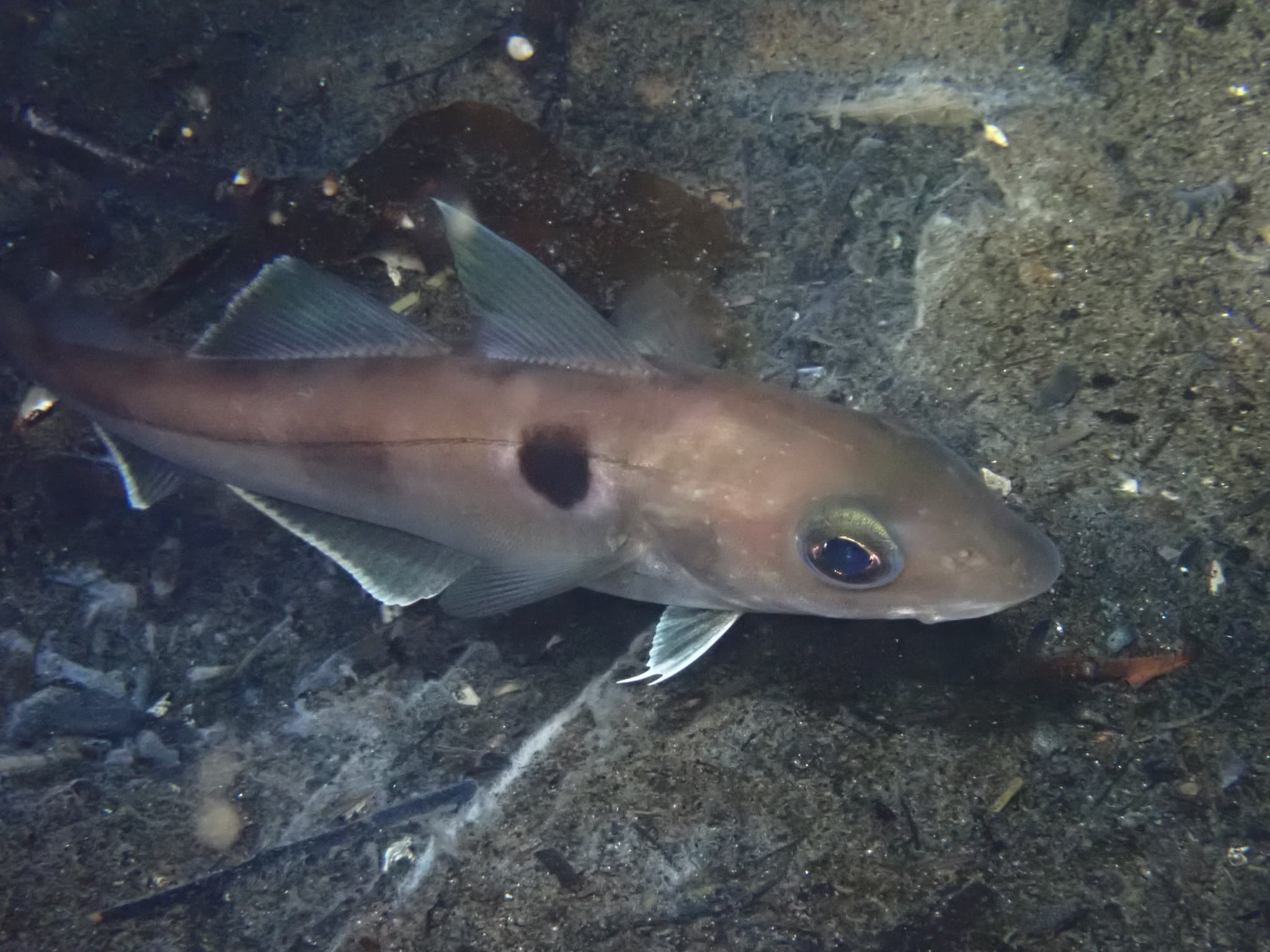
- · Haddock have a distinctive 'St Peter's mark' — a black spot near the gills said in legend to be the apostle's fingerprint
- · Arbroath Smokies have PDO (Protected Designation of Origin) status
- · Cullen skink takes its name from the Moray fishing village of Cullen
- · Finnan haddie was the original cold-smoked Scottish haddock
Haddock vs…
Haddock is slightly sweeter and more delicate than cod. Cod has firmer, larger flakes. In fish and chips most chip-shop punters slightly prefer haddock.
Cheaper and stronger-flavoured than haddock. Often used as a haddock substitute in lower-end fish and chips. Haddock is dramatically better quality.
Frequently asked questions
Is haddock sustainable?
North Sea haddock has recovered from previous overfishing and is now MCS 2–3 — a reasonable choice. Look for MSC-certified haddock for the most reliable indication of responsible sourcing.
What's the difference between haddock and cod?
Haddock is slightly sweeter and more delicate; cod has larger, firmer flakes. Both are mild white fish. In Scottish chip shops, haddock is the more popular choice; in England, cod dominates.
What is an Arbroath Smokie?
A whole haddock smoked over hardwood in barrels at the Arbroath fishing village in Angus. PDO-certified — only Smokies made within an 8km radius of Arbroath can use the name. Hot-smoked, ready to eat without further cooking.
How long do you cook haddock?
About 4 minutes per cm of thickness. A 2cm fillet needs 8 minutes total in a pan or oven. Battered haddock in deep oil: 6–8 minutes. Past 10 minutes a fillet will dry out.
Can you eat smoked haddock raw?
Hot-smoked haddock (Arbroath Smokies) is fully cooked and safe to eat without further cooking. Cold-smoked haddock (Finnan haddie) needs gentle cooking before eating.
Why is some smoked haddock bright yellow?
Cheap "smoked haddock" is often dyed bright yellow with food colouring rather than properly smoked. Naturally smoked haddock is pale beige. Always buy undyed.
How much does haddock cost per kg in the UK?
Fresh Scottish haddock typically costs £15–£25 per kg from a fishmonger, depending on size, season and how it's prepared. Per portion that works out around Fresh haddock fillets £10–14/kg. Smoked haddock £14–18/kg. Around £4–6 per portion. The standard Scottish white fish.. Stable pricing year-round. Smoked haddock (Finnan or Arbroath Smokie) is a bit pricier than fresh but more flavourful.
More species guides
Langoustine
Scotland’s most valuable seafood export — and, bafflingly, a product most Scots have never eaten. Also called Dublin Bay prawns, Norway lobster, or scampi in its cheapest incarnation. Fresh, whole langoustines landed on the west coast are one of the great seafood experiences in the world.
Cod (North Sea)
The backbone of Scottish fish and chips. North Sea cod has been through stock collapse and recovery cycles; look for MSC-certified Icelandic or Barents Sea if you’re unsure about provenance.
Scottish Salmon
Scotland’s most exported food product by value. Virtually all salmon you buy is farmed — wild Atlantic salmon is critically endangered and mostly reserved for catch-and-release sport fishing. Look for RSPCA Assured or organic labels for higher welfare.
Native Oyster
The traditional British native oyster is in season when there’s an ‘R’ in the month. Loch Ryan is the last commercially active native oyster bed in Scotland. Meatier, more metallic, and more characterful than the common Pacific rock oyster.
Mackerel
Cheap, sustainable when line-caught, and a brilliant introduction to oily fish cookery. Scottish line-caught mackerel in late summer is one of the best value food items in the country.
King Scallop
Hand-dived scallops from the west coast are one of Scotland’s premier luxuries. Much better than dredged, with zero seabed damage and notably plumper meat. Pay the extra.
Where to eat haddock in Scotland
Haddock and chips at the harbour wall — the Scottish chippy benchmark. Many regulars prefer haddock over cod here.
Visit siteMSC-certified haddock; consistently among the UK's top three chippies. Eat on the beach behind the shop.
Visit siteThe way Arbroath smokies have been made for 200 years — over hardwood in a half-whisky-barrel pit. Find his stall at Scottish food shows and farmers' markets across the country.
Visit siteExcellent haddock supper option in St Andrews; clear sustainability messaging at the counter.
Visit siteBilly Boyter's tasting menu often includes a Cullen Skink or smoked-haddock course — the most-elevated treatment of Scotland's most-emblematic fish.
Visit siteRelated articles
8 min read
Cullen Skink Recipe: What It Is and Why It Beats Chowder
Cullen skink is Scotland's great fish soup — smoked haddock, potato, onion, milk. What the name means, the proper recipe, the mistakes that ruin it, and where it comes from.
7 min read
Arbroath Smokies: What They Are, How to Eat Them, and Why the Name Is Protected
Hot-smoked haddock tied in pairs and smoked over hardwood in a barrel. What makes a smokie a smokie, how to serve one, and the PGI that protects the name.
8 min read
Why Scottish Salmon Divides Opinion
Farmed salmon is Scotland's biggest food export and most controversial product. Environmentalists hate it, chefs love it. What's actually going on.
Some links on this page are affiliate links. TasteSCOT may earn a small commission at no extra cost to you. Haddock is a major allergen — see allergen advice above.If you drink, please drink responsibly.