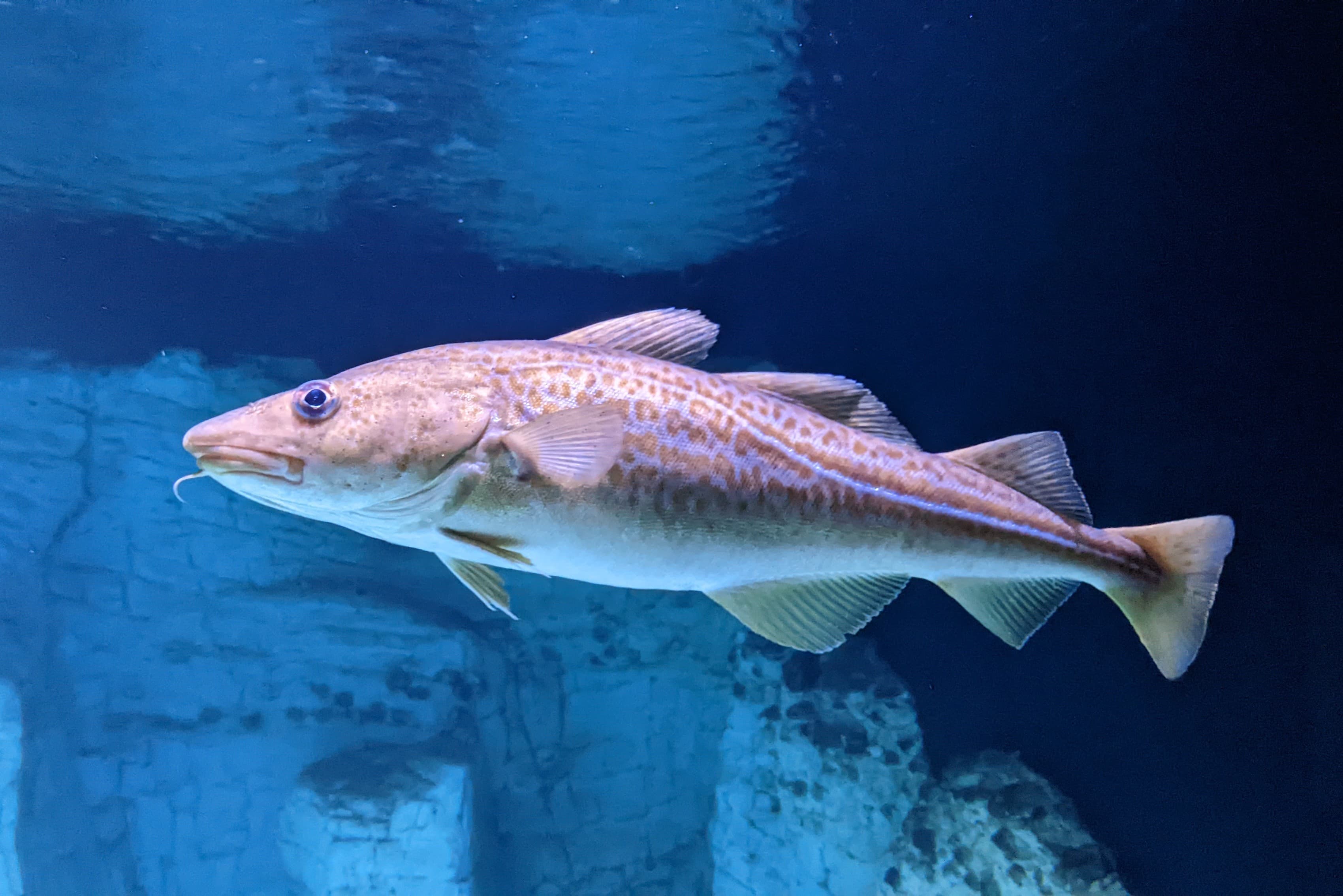
Cod (North Sea)
Gadus morhua
Last updated 16 May 2026
The backbone of Scottish fish and chips. North Sea cod has been through stock collapse and recovery cycles; look for MSC-certified Icelandic or Barents Sea if you’re unsure about provenance.
At a glance
North Sea cod is now MCS 2–3 — a reasonable choice from MSC-certified fisheries. The stock has recovered dramatically from its 2006 collapse. The story is one of conservation success, but careful sourcing still matters.
Best choice: MSC-certified North Sea or Icelandic cod. Long-line caught is a small premium worth paying.
Avoid: Avoid uncertified cod. Avoid Atlantic cod from depleted regional stocks (Newfoundland still recovering).
Seasonality
Compare every Scottish species month by month in the seasonal seafood calendar.
Best quality: Best quality January–April when cod is in winter feeding condition. Spring spawning cod (post-March) can be lean.
Best value: Stable year-round at £12–18/kg. Recovery of North Sea cod stocks has helped pricing. Fresh cod is more expensive than frozen.
Frozen: Frozen-at-sea cod is excellent value and quality is largely unaffected. Fresh is preferable for fish and chips.
How to buy
- Bright, clear eyes (whole)
- Firm, white, springy flesh that bounces back
- Translucent rather than dull flesh
- Clean sea smell — never sharp or fishy
- Large flakes (cod is the textbook flaky white fish)
- Cloudy or sunken eyes
- Soft, watery, or browning flesh
- Strong fishy smell
- Cheap cod of unclear origin (often imported, may be different species)
- Fish counter cod that's been sitting on ice for several days
Fresh vs frozen: Fresh is best for cooking. Frozen-at-sea cod is excellent value and the texture is largely unaffected.
Where to buy
Supermarkets: Excellent supermarket availability. All major supermarkets stock fresh and frozen MSC-certified cod year-round at £12–18/kg fresh and £10–14/kg frozen.
How much to buy
A medium cod fillet is around 200g — perfect for one. A large cod loin can be portioned for 4 from 800g.
Storage
Fridge: Cook within 1–2 days of purchase. Cod loses freshness faster than haddock.
Freezer: Up to 3 months frozen. Pre-portion before freezing.
Thawing: Thaw in fridge overnight. Pat dry before cooking.
How to prepare
Run finger along fillet to find pin bones. Remove with tweezers — angle towards the head.
Skin-on for pan-frying (it crisps brilliantly). Skinless for fish pie, curry, baked dishes.
Wet cod steams instead of frying. Critical step before pan-cooking.
Cod has soft, large flakes that fall apart easily. Handle gently and don't flip more than once when cooking.
- →Cod fillets break apart easily — use a fish slice, not tongs
- →Pat dry thoroughly before any pan-cooking
- →Skin-on is generally better for technique — it holds the fillet together
Prep time: 5 minutes for a filleted cod loin.
Cooking methods
Beer-batter (250g flour, 250ml cold beer, salt). Heat oil to 180°C. Dip seasoned fillet, fry 6–8 minutes until golden.
The classic. The English fish-shop choice.
Pat dry. Hot pan with butter and oil. Lay fillet skin-down. Cook 4 minutes until skin is crisp. Flip carefully, 1–2 minutes.
Quick weeknight dinner with crisp skin.
Place in a baking dish with olive oil, lemon, herbs. Bake at 180°C for 15 minutes for a 200g fillet, 20 for a 600g loin.
Family dinners and a clean kitchen.
Submerge cod in warm (60°C) olive oil with herbs. Cook 15 minutes until just flaking. Drain, finish with lemon.
Restaurant-style at home. Foolproof technique.
- Overcooking — cod dries out fast. 4 minutes per cm thickness is the rule.
- Flipping multiple times in the pan — the fillet falls apart
- Not patting dry — wet cod steams
- Buying cheap unverified cod — the species mislabelling problem is real
Recipes
Pan-fried Cod with Brown Butter and Capers
- · 2 cod fillets (skin on, about 200g each)
- · 50g butter
- · 2 tbsp capers
- · Juice of 1 lemon
- · 2 tbsp olive oil
- · Sea salt and black pepper
- · Handful of parsley (chopped)
- Pat cod dry. Season skin and flesh.
- Heat oil in a non-stick pan. Lay cod skin-down.
- Cook 4 minutes without moving until skin is crisp.
- Flip carefully, cook 1–2 minutes more. Remove from pan.
- Add butter to pan. Cook until brown and nutty.
- Add capers, lemon juice, parsley. Pour over cod.
Brown butter (beurre noisette) is the secret — when it smells nutty, it's done. Past that, it burns.
Pairs with: Chablis or Albariño
Cod and Chorizo Stew
- · 600g cod fillets (cut into chunks)
- · 200g chorizo (sliced)
- · 1 onion (chopped)
- · 4 garlic cloves (sliced)
- · 1 tin chopped tomatoes
- · 1 tin butter beans
- · 300ml fish stock
- · 1 tsp smoked paprika
- · Olive oil
- · Parsley
- Cook chorizo in a wide pan until crisp and the orange oil renders.
- Add onion and garlic, cook 5 minutes.
- Add tomatoes, stock, butter beans, paprika. Simmer 10 minutes.
- Place cod chunks on top. Cover, cook 6–8 minutes until cod flakes.
- Scatter parsley, drizzle olive oil.
Don't stir once the cod is in — it breaks apart. Just shake the pan gently.
Pairs with: Albariño or a light red (Beaujolais)
Serve with
Cod is mild — accompaniments do most of the flavour work. Lemon, butter, capers, salty cured meats all work.
Drink pairings
Cod is a vehicle — pair the wine to the sauce or accompaniments, not the fish itself.
Nutrition per 100g
Excellent lean protein. Very low fat, high protein, rich in iodine, B12, and selenium. One of the leanest mainstream fish.
Allergen
Cod is a fish. Contains: Fish. Allergen info varies by supplier — always confirm with your seller, especially if buying breaded or battered preparations which may contain wheat, egg, or milk.
Cod's recovery in the North Sea is one of the genuine conservation success stories of recent years — from a near-collapse in the 2000s to MCS 2–3 stable today. Buy MSC-certified cod with confidence. The flesh is mild and a clean canvas for sauces and accompaniments. For pure flavour, haddock has the edge; for texture and prestige, cod is the choice. The English fish-and-chips standard for good reason.
Cod has been the foundation of British fish and chips for over 150 years. The North Sea cod fishery's collapse in 2006 — followed by remarkable recovery thanks to strict quotas — is a textbook conservation case. Salt cod (bacalao, baccalà) is a Mediterranean staple made from preserved Atlantic cod, historically a major Scottish export.
- · A single cod can lay several million eggs in one spawning
- · Cod fishing built the economies of Atlantic Canada, Newfoundland, and the Hanseatic League
- · The Cod Wars between the UK and Iceland (1958, 1973, 1976) were over fishing rights
- · North Sea cod can grow to 25kg, though most market fish are 2–5kg
Cod (North Sea) vs…
Haddock is slightly sweeter and has smaller flakes; cod has firmer, larger flakes. Cod is the English fish-shop favourite; haddock dominates Scotland.
Cheaper and stronger-flavoured than cod. Sustainable. Can substitute for cod in stews and pies. Not as good for fish and chips — the texture is wrong.
Frequently asked questions
Is cod sustainable?
North Sea cod has recovered substantially from its 2006 stock collapse and is now MCS 2–3. Look for MSC certification for the most reliable indication of sustainable sourcing. Avoid uncertified cod or cod from depleted regional stocks.
What's the difference between cod and haddock?
Cod has larger, firmer flakes and a milder flavour. Haddock has smaller flakes and is slightly sweeter. Cod dominates English fish and chips; haddock dominates Scottish.
How do you cook cod fillets?
Pat dry. Pan-fry skin-down 4 minutes for crispy skin, flip carefully, 1–2 minutes more. Bake at 180°C for 15 minutes per 200g fillet. Confit in warm olive oil (60°C) for 15 minutes for restaurant texture.
How long do you cook cod?
About 4 minutes per cm of thickness. A 2cm fillet needs 5–6 minutes total. Cod dries out fast — pull from the heat the moment the flesh just starts flaking.
Can you eat cod raw?
Not generally — cod can carry parasites that need cooking or freezing to neutralise. For raw preparations (sushi, ceviche), use sashimi-grade cod that has been frozen at -20°C for 24+ hours.
What is salt cod?
Cod that's been heavily salted and dried — preserves for months. Used in Mediterranean cooking (bacalao, brandade, baccalà). Soak overnight in fresh water before cooking. Historically a major Scottish export.
How much does cod (north sea) cost per kg in the UK?
Fresh Scottish cod (north sea) typically costs £15–£25 per kg from a fishmonger, depending on size, season and how it's prepared. Per portion that works out around Fresh cod fillets £14–18/kg. About £4–6 per portion. Salt cod (cured) £25–35/kg.. Stable year-round at £12–18/kg. Recovery of North Sea cod stocks has helped pricing. Fresh cod is more expensive than frozen.
More species guides
Langoustine
Scotland’s most valuable seafood export — and, bafflingly, a product most Scots have never eaten. Also called Dublin Bay prawns, Norway lobster, or scampi in its cheapest incarnation. Fresh, whole langoustines landed on the west coast are one of the great seafood experiences in the world.
Scottish Salmon
Scotland’s most exported food product by value. Virtually all salmon you buy is farmed — wild Atlantic salmon is critically endangered and mostly reserved for catch-and-release sport fishing. Look for RSPCA Assured or organic labels for higher welfare.
Native Oyster
The traditional British native oyster is in season when there’s an ‘R’ in the month. Loch Ryan is the last commercially active native oyster bed in Scotland. Meatier, more metallic, and more characterful than the common Pacific rock oyster.
Mackerel
Cheap, sustainable when line-caught, and a brilliant introduction to oily fish cookery. Scottish line-caught mackerel in late summer is one of the best value food items in the country.
King Scallop
Hand-dived scallops from the west coast are one of Scotland’s premier luxuries. Much better than dredged, with zero seabed damage and notably plumper meat. Pay the extra.
Brown Crab
Scotland's most important crab species and the meaty workhorse of British shellfish cookery. UK-creel-caught brown crab has one of the best sustainability profiles of any commercial seafood — low-impact pot fishing, healthy stocks. White claw meat is sweet and firm; brown body meat is rich and intense.
Where to eat cod (north sea) in Scotland
Multiple-times UK Fish & Chip Shop of the Year. Cod from sustainable North Sea grounds, batter as good as anywhere in Britain. Eat at the harbour wall.
Visit siteCalum Richardson's beachfront chippy — Marine Stewardship Council-certified, multiple UK chippy-of-the-year wins. Cod and chips with a North Sea view.
Visit siteEdinburgh institution since 1975. Cod fillets fried to order; long queue but worth it. Pre- or post-pint food in the New Town.
Visit siteSt Andrews chippy with serious sustainability credentials — cod from boats they name on the wall. Excellent fish, light batter.
Visit siteFor cod outside the chippy context — roasted cod loins with seasonal sides from the harbour-side kitchen.
Related articles
7 min read
How to Buy Fish from a Fishmonger: A Beginner's Guide
A no-judgement guide to walking into a fishmonger for the first time. What to ask, what to look for, how much to buy, and how not to get ripped off.
7 min read
10 Scottish Fish You Should Be Eating (But Probably Aren't)
Beyond salmon and haddock, Scotland's waters produce extraordinary fish that most Scots have never cooked. Here are 10 underrated species, where to buy them, and what to do with them.
7 min read
The Best Scottish Seafood Delivery Services: A Buying Guide
Scotland exports most of its best seafood. How to get langoustines, scallops and fresh fish delivered to your door — the suppliers who ship direct.
Some links on this page are affiliate links. TasteSCOT may earn a small commission at no extra cost to you. Cod (North Sea) is a major allergen — see allergen advice above.If you drink, please drink responsibly.