Mackerel
Scomber scombrus
Last updated 16 May 2026
Cheap, sustainable when line-caught, and a brilliant introduction to oily fish cookery. Scottish line-caught mackerel in late summer is one of the best value food items in the country.
At a glance
Scottish mackerel sustainability is currently MCS 3–4, recovering from periods of overfishing in the North Atlantic. Hook-and-line caught fish from sustainable Scottish boats are the best choice.
Best choice: Hook-and-line caught from Scottish small boats. Look for "Scottish handline mackerel" on the label.
Avoid: Avoid large-scale industrial mackerel from international fleets (overfishing). Avoid frozen mackerel of unclear origin.
Seasonality
Compare every Scottish species month by month in the seasonal seafood calendar.
Best quality: Best quality June–September when mackerel are fattest. Summer mackerel — caught in warmer water — are oilier, richer, and far better than winter fish.
Best value: Cheapest June–September during the main run. Winter mackerel (when available) is leaner and not really worth buying.
Frozen: Frozen-at-sea mackerel is excellent off-season. The oily flesh freezes well and quality is largely unaffected.
How to buy
- Bright, clear, slightly bulging eyes
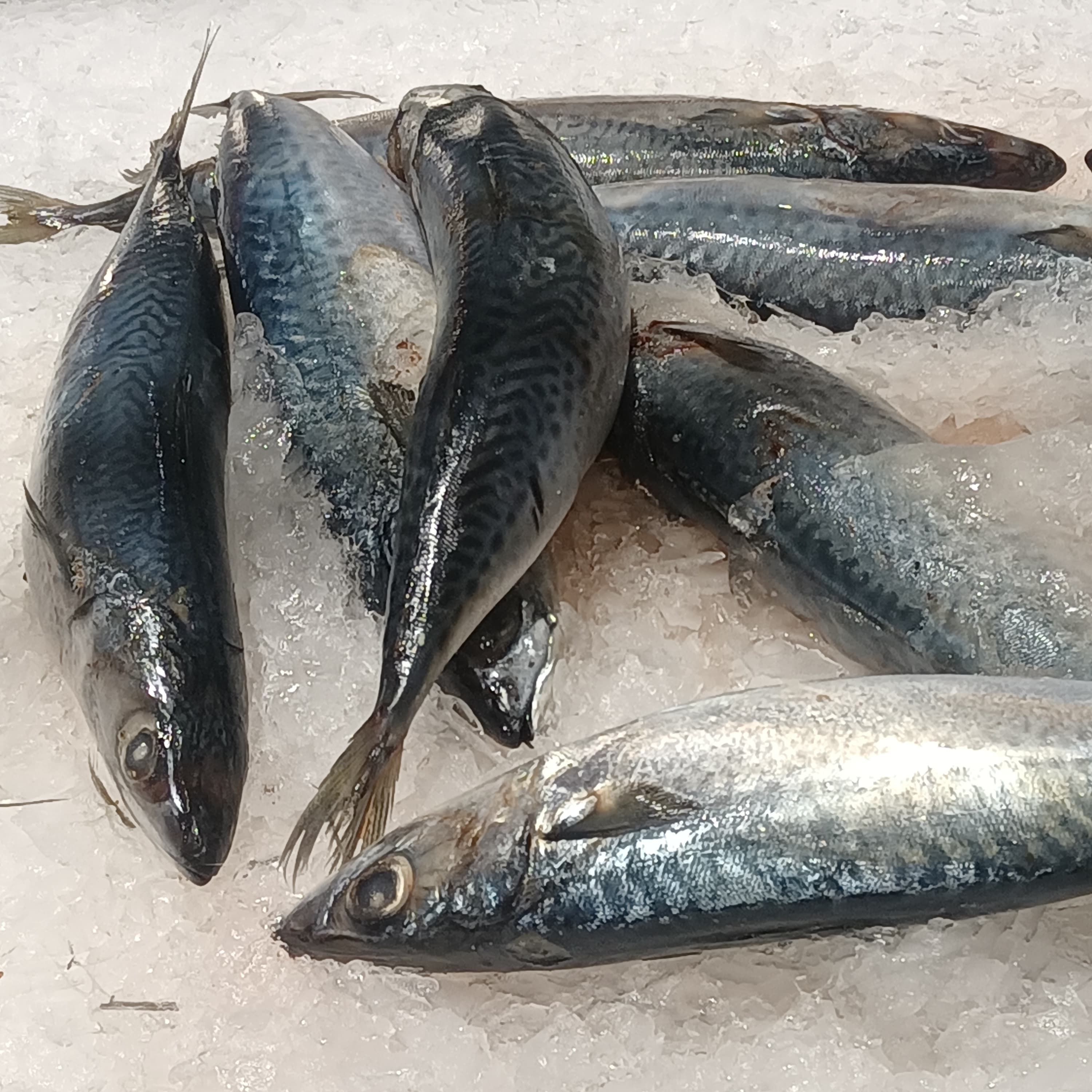
- Bright, shiny skin with iridescent green-blue stripes
- Firm flesh that springs back when pressed
- Fresh sea smell — never fishy or ammonia
- Bright red gills (if whole)
- Cloudy or sunken eyes
- Dull, dry skin
- Soft, mushy flesh
- Strong fishy smell
- Brown or grey gills
Fresh vs frozen: Fresh from a Scottish boat in summer is unbeatable. Frozen-at-sea mackerel is excellent off-season — the oily flesh handles freezing very well.
Where to buy
Supermarkets: Excellent supermarket availability. Tesco, Sainsbury's, Waitrose all stock fresh whole and filleted Scottish mackerel May–September at £5–7/kg. Smoked mackerel widely available year-round.
How much to buy
A whole mackerel (around 400g) yields two generous fillets — perfect for one person.
Storage
Fridge: Cook on day of purchase. If you must, store in the fridge for 24 hours wrapped in cling film over ice.
Freezer: Freezes excellently for up to 3 months. Mackerel's oil content protects the texture in the freezer.
Thawing: Thaw in fridge overnight. Pat dry before cooking.
How to prepare
Make a slit from anus to gills. Remove guts. Rinse cavity thoroughly.
Mackerel scales are small and edible — most people skip this step. Run a knife from tail to head if you want to remove them.
Make a cut behind the gills, then run a sharp knife along the backbone from head to tail to release each fillet.
Run your finger along the fillet to find pin bones. Pull them out with tweezers — angle them along the line of the bone.
- →Score the skin if cooking whole — helps the heat penetrate
- →Mackerel doesn't need much — salt, pepper, lemon, hot pan
- →Cook the day you buy it; mackerel goes off faster than most fish
Prep time: 5 minutes to gut and fillet a whole mackerel.
Cooking methods
Score the skin both sides. Season with salt and pepper. Stuff cavity with lemon and herbs. Grill or BBQ 4–5 minutes per side until skin is crisp and flesh is just firm.
The summer classic. The oils baste themselves.
Score skin. Hot pan with a little oil. Lay fillets skin-down. Cook 3–4 minutes until skin is crisp. Flip, 30 seconds. Squeeze of lemon, serve.
Quick weeknight dinner.
Hot-smoked mackerel (the standard) is widely sold pre-prepared. To smoke at home: brine 30 minutes, dry, then hot-smoke at 80°C for 1–2 hours.
Buy ready-made — Scottish smoked mackerel is excellent.
Pickle filleted mackerel in vinegar, sugar, and spices for 12+ hours. Eat raw on rye bread or with potatoes — the Nordic style.
Cured fish lovers. A different, intense experience.
- Storing too long — mackerel goes off faster than most fish
- Overcooking — fillets need 4 minutes max; whole 8–10
- Buying winter mackerel — leaner and less interesting than summer
- Removing the skin before cooking — the crisp skin is half the appeal
Recipes
BBQ Mackerel with Lemon and Thyme
- · 2 whole mackerel (cleaned)
- · 1 lemon (sliced)
- · Several thyme sprigs
- · 2 tbsp olive oil
- · Sea salt and black pepper
- Score skin both sides of mackerel.
- Stuff cavity with lemon slices and thyme.
- Brush with oil, season generously.
- BBQ or grill 4–5 minutes per side.
- Serve with lemon wedges and a green salad.
The mackerel's natural oils baste it as it cooks. Don't overcomplicate.
Pairs with: Sancerre or a crisp rosé
Pan-fried Mackerel with Gooseberry Sauce
- · 2 mackerel fillets
- · 150g gooseberries
- · 50g sugar
- · 50ml white wine
- · 20g butter
- · Olive oil
- · Sea salt
- Simmer gooseberries with sugar and wine for 8–10 minutes until soft.
- Heat oil in a pan. Score mackerel skin.
- Cook skin-down 3–4 minutes until crispy. Flip, 30 seconds.
- Stir butter into the gooseberry sauce.
- Serve fillets on a swirl of gooseberry sauce.
A British classic. The acidity of gooseberry cuts through the oily fish perfectly.
Pairs with: Riesling or English sparkling wine
Serve with
Acidic accompaniments cut through the oil — the British classic is gooseberry sauce.
Drink pairings
Mackerel is rich and oily — pair with acidic, palate-cleansing drinks.
Nutrition per 100g
One of the highest-omega-3 foods available — essential for heart and brain health. Excellent source of vitamin D and B12.
Allergen
Mackerel is an oily fish. Contains: Fish. Mackerel is one of the most histamine-prone fish — buy fresh, eat the same day, and keep ice-cold from purchase to plate. Histamine levels rise rapidly once the cold chain breaks. Allergen info varies by supplier — always confirm with your seller.
Mackerel is the most underrated fish in Scotland. £5–8/kg, sustainable, packed with omega-3, and properly delicious BBQ-cooked in summer. Most Scots think of mackerel as something for cats — they're missing out on one of the great cheap luxuries of British seafood. Buy whole from a fishmonger in summer, score the skin, BBQ with lemon and thyme. There's nothing fancier you can do for £8.
Mackerel was historically Scotland's working-class summer fish — caught in vast quantities, smoked, salted, and traded across Europe. The collapse of the herring industry in the 20th century shifted attention to mackerel, which today is one of Scotland's most valuable wild-caught fisheries.
- · Mackerel's iridescent stripes change colour after death — bright in the sea, dulling within hours
- · They swim in vast schools that can be miles long
- · Mackerel must keep swimming to breathe — they have no gill covers
- · Smoked mackerel was a wartime staple — long-lasting, nutritious, cheap
Mackerel vs…
Both oily fish, both sustainable. Herring is smaller, more bony, traditionally pickled. Mackerel has more meat per fish and is easier to BBQ.
Smaller, even oilier than mackerel, often grilled whole. Mackerel is the more substantial main course; sardines are starters.
Frequently asked questions
Is Scottish mackerel sustainable?
Mackerel sustainability is currently MCS 3–4 — recovering from past overfishing. Hook-and-line caught from Scottish small boats is the best choice. Avoid mackerel from large industrial trawlers.
When is Scottish mackerel in season?
June–September, peaking July–August. Summer mackerel are oilier, richer, and far better than winter fish — most fishmongers don't bother with mackerel out of season.
How long do you cook mackerel?
Whole mackerel: 4–5 minutes per side under a hot grill or on a BBQ. Fillets: 3–4 minutes skin-side down, 30 seconds flesh-side. Past 6 minutes the flesh dries.
Do you need to remove mackerel skin?
No — the crispy skin is one of the best parts. Score the skin before cooking to help the heat penetrate evenly. Skin contains the highest-omega-3 part of the fish.
What's the best way to cook mackerel?
BBQ or grilled whole is the classic — the oils baste the fish as it cooks. Pan-fried fillets are quicker for weeknights. Smoked mackerel is widely available pre-prepared.
Is mackerel healthy?
Yes — exceptionally. Mackerel has one of the highest omega-3 contents of any fish (2.6g per 100g), plus vitamin D, B12, and high-quality protein. NHS recommends two portions of oily fish per week.
How much does mackerel cost per kg in the UK?
Fresh Scottish mackerel typically costs £5–£12 per kg from a fishmonger, depending on size, season and how it's prepared. Per portion that works out around Mackerel is properly cheap — £5–8/kg whole. About £2–3 per fillet. The best-value oily fish in Scotland.. Cheapest June–September during the main run. Winter mackerel (when available) is leaner and not really worth buying.
More species guides
Langoustine
Scotland’s most valuable seafood export — and, bafflingly, a product most Scots have never eaten. Also called Dublin Bay prawns, Norway lobster, or scampi in its cheapest incarnation. Fresh, whole langoustines landed on the west coast are one of the great seafood experiences in the world.
Cod (North Sea)
The backbone of Scottish fish and chips. North Sea cod has been through stock collapse and recovery cycles; look for MSC-certified Icelandic or Barents Sea if you’re unsure about provenance.
Scottish Salmon
Scotland’s most exported food product by value. Virtually all salmon you buy is farmed — wild Atlantic salmon is critically endangered and mostly reserved for catch-and-release sport fishing. Look for RSPCA Assured or organic labels for higher welfare.
Native Oyster
The traditional British native oyster is in season when there’s an ‘R’ in the month. Loch Ryan is the last commercially active native oyster bed in Scotland. Meatier, more metallic, and more characterful than the common Pacific rock oyster.
King Scallop
Hand-dived scallops from the west coast are one of Scotland’s premier luxuries. Much better than dredged, with zero seabed damage and notably plumper meat. Pay the extra.
Brown Crab
Scotland's most important crab species and the meaty workhorse of British shellfish cookery. UK-creel-caught brown crab has one of the best sustainability profiles of any commercial seafood — low-impact pot fishing, healthy stocks. White claw meat is sweet and firm; brown body meat is rich and intense.
Where to eat mackerel in Scotland
Tom Kitchin's nature-to-plate menu often features mackerel — cured, smoked, or with sauce vierge. The seasonal Scottish showcase.
Visit siteMackerel tartare and ceviche-style starters using Peterhead-landed fish. One of Edinburgh's most consistent mackerel preparations.
Visit siteMackerel doesn't get fresher — Stonehaven's small inshore boats land them at the harbour 100m from the kitchen. Grilled whole, served simply.
Glass-walled dining room over the West Sands. Mackerel as a tartare starter or pan-fried main, depending on the day's landing.
Visit siteWest coast mackerel grilled and served with the loch view that built it. Excellent for line-caught freshness.
Visit siteRelated articles
8 min read
Why Scottish Salmon Divides Opinion
Farmed salmon is Scotland's biggest food export and most controversial product. Environmentalists hate it, chefs love it. What's actually going on.
9 min read
The Scottish Seafood Export Paradox
Scotland exports 80% of its seafood — langoustines to Spain, salmon to France, scallops to China. Meanwhile, Scots eat frozen fish fingers. Here's why, and how to buy back in.
7 min read
How to Buy Fish from a Fishmonger: A Beginner's Guide
A no-judgement guide to walking into a fishmonger for the first time. What to ask, what to look for, how much to buy, and how not to get ripped off.
Some links on this page are affiliate links. TasteSCOT may earn a small commission at no extra cost to you. Mackerel is a major allergen — see allergen advice above.If you drink, please drink responsibly.