Scottish Salmon
Salmo salar
Last updated 16 May 2026
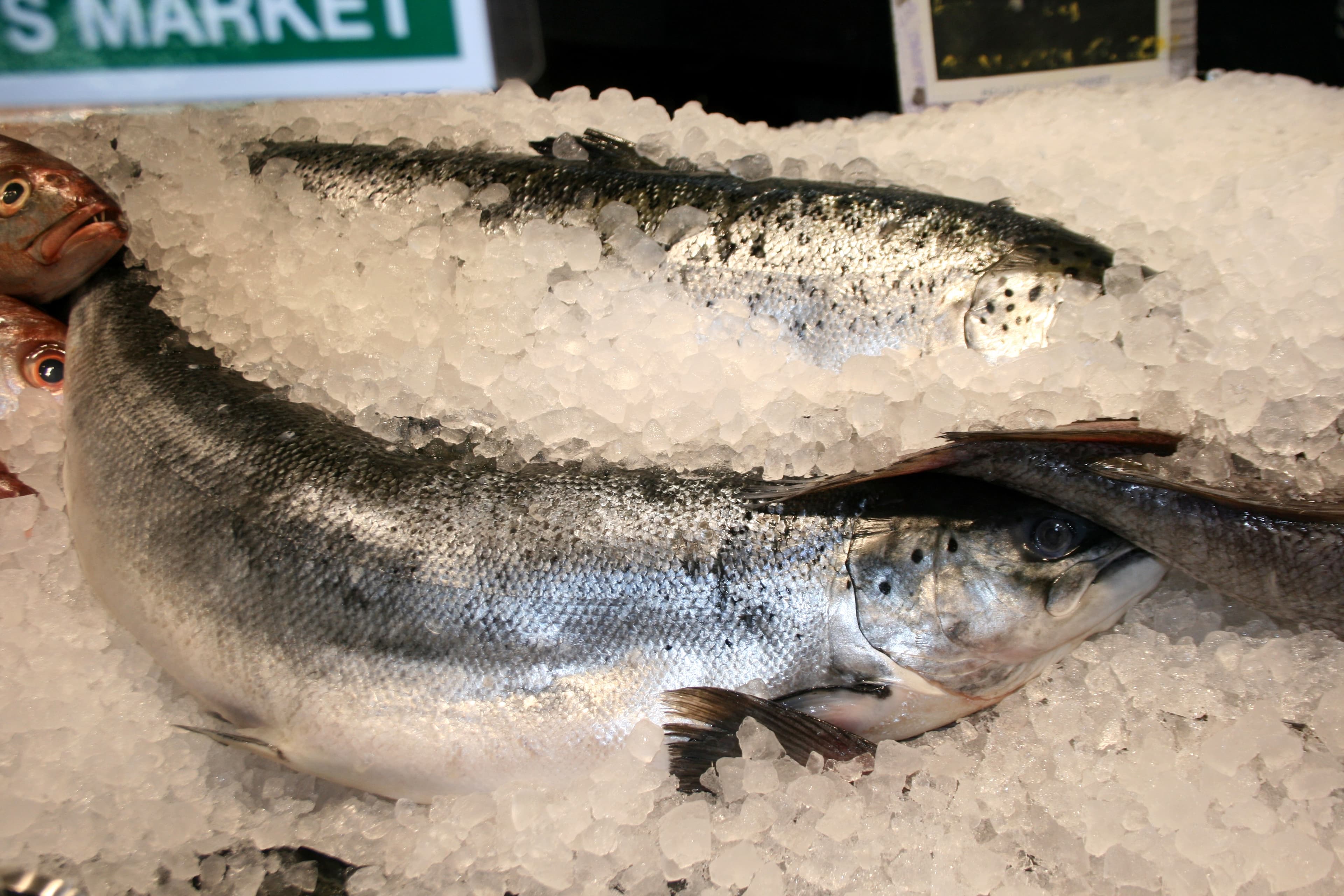
Scotland’s most exported food product by value. Virtually all salmon you buy is farmed — wild Atlantic salmon is critically endangered and mostly reserved for catch-and-release sport fishing. Look for RSPCA Assured or organic labels for higher welfare.
At a glance
Farmed Scottish salmon is contentious. RSPCA Assured and ASC-certified farms score better but the industry as a whole has serious environmental concerns: sea lice, fish escapes, waste impact on lochs. Wild Atlantic salmon (rod-caught, regulated) is genuinely sustainable but extremely rare.
Best choice: RSPCA Assured or ASC-certified farmed salmon. Or organic Scottish salmon (Loch Duart, Wester Ross). Wild rod-caught is the gold standard but very limited supply.
Avoid: Avoid uncertified farmed salmon. Avoid wild salmon of unclear origin (illegal netting concerns).
Seasonality
Compare every Scottish species month by month in the seasonal seafood calendar.
Best quality: Farmed Scottish salmon is available year-round and quality is consistent. Wild Atlantic salmon is rare, expensive (£40+/kg), and only available June–August.
Best value: Farmed salmon prices are stable year-round at £10–18/kg. Wild salmon spikes to £40–60/kg in summer.
Frozen: Frozen-at-sea wild salmon is excellent. Frozen farmed salmon is acceptable but fresh is dramatically better.
How to buy
- Bright red-orange flesh (farmed) or deeper red (wild)
- Firm, springy flesh that bounces back
- Bright, clear eyes (whole fish)
- Clean sea or river smell
- Skin shiny and intact
- Pale, dull, or grey flesh
- Soft, watery flesh that holds finger marks
- Fishy or sour smell
- Cheap 'smoked salmon trim' for sushi or carpaccio (texture issues)
- Salmon labelled 'Scottish' that's actually packed/processed in Scotland but farmed elsewhere
Fresh vs frozen: Fresh is best for grilling and pan-frying. Frozen-at-sea wild salmon is excellent off-season. Pre-sliced smoked salmon is widely available year-round.
Where to buy
Supermarkets: Excellent supermarket availability. Tesco, Sainsbury's, Waitrose all stock fresh and smoked Scottish salmon year-round at £10–18/kg fresh and £30–50/kg smoked. Look for RSPCA Assured or ASC certification.
How much to buy
A side of farmed salmon is around 1.2–1.5kg — feeds 6–8 generously. Smoked salmon is sold by 100g pack.
Storage
Fridge: Cook within 1–2 days of purchase. Smoked salmon keeps 3–5 days unopened, 2 days opened.
Freezer: Up to 3 months. Salmon's oil content protects texture in the freezer.
Thawing: Thaw in fridge overnight. Pat dry before cooking.
How to prepare
Run finger along fillet to find pin bones. Remove with tweezers — angle towards the head to remove cleanly.
Skin-on for grilling and pan-frying (it crisps brilliantly). Skinless for poaching, baking, raw.
Critical for searing. Wet salmon steams instead of crisping.
Salt only when the pan is hot. Earlier salting draws moisture and causes a mushy texture.
- →Score skin to prevent curling
- →Cooked-pink-in-middle is the right texture — about 5 minutes for a 2cm fillet
- →For raw preparations (sashimi, gravadlax), use sashimi-grade or freeze first to kill parasites
Prep time: 5 minutes for a filleted side. Allow 10 minutes if pin-boning a whole side.
Cooking methods
Pat dry. Hot pan with a splash of oil. Lay fillet skin-down. Cook 4 minutes without moving until skin is crispy. Flip, 1–2 minutes. Lemon, salt.
The best home preparation. Crispy skin, tender flesh.
Place skin-down on a tray. Brush with olive oil, salt, pepper, lemon. Bake at 180°C for 18–20 minutes for a 1.2kg side.
Family meals and dinner parties.
Mix 100g sea salt, 100g sugar, 1 tbsp dill seeds. Pat onto a 1kg side. Wrap tightly in cling film. Refrigerate 48 hours, turning twice. Slice thinly.
A classic that's genuinely satisfying to make at home.
Brine fillets 1 hour. Pat dry. Smoke over hardwood at 80°C for 30–40 minutes until flaky.
BBQ enthusiasts. Excellent on hot toast with horseradish.
- Overcooking — pink in the middle is right, dry and flaky is wrong
- Not patting dry before pan-frying — steams instead of crisping
- Buying paled-out (over-old) salmon — flesh should be vivid pink/orange
- Treating wild and farmed as interchangeable — they have very different textures
Recipes
Pan-fried Salmon with Crispy Skin
- · 2 salmon fillets (skin on, about 180g each)
- · 1 tbsp olive oil
- · 20g butter
- · 1 lemon
- · Sea salt and black pepper
- · Optional: dill or capers
- Pat salmon dry with kitchen paper. Score the skin lightly.
- Heat oil in a non-stick pan over medium-high heat.
- Lay salmon skin-down. Press gently for first 30 seconds.
- Cook 4 minutes until skin is crisp and golden.
- Flip, add butter to the pan. Spoon butter over the salmon for 1–2 minutes.
- Squeeze over lemon, season, serve.
Don't move the salmon for the first 4 minutes — the skin needs to crisp.
Pairs with: Sancerre or Chablis
Beetroot-Cured Gravadlax
- · 1kg salmon fillet (skin on)
- · 100g coarse sea salt
- · 100g sugar
- · 1 large raw beetroot (grated)
- · 1 tbsp crushed peppercorns
- · Zest of 1 lemon
- · Handful of dill (chopped)
- Pat salmon dry. Place skin-down on a sheet of cling film.
- Mix salt, sugar, beetroot, peppercorns, lemon zest, and dill.
- Spread the mix over the salmon to cover.
- Wrap tightly in cling film, place in a tray. Top with weights (cans of beans).
- Refrigerate 48 hours, turning every 12 hours.
- Rinse, pat dry, slice thinly diagonally. Serve with rye bread, sour cream, capers.
The beetroot gives stunning colour and a subtle earthiness. Bin the cure liquid (it's salty).
Pairs with: Aquavit or chilled Manzanilla sherry
Protected in law
- Scottish Salmon is a registered Protected Geographical Indication (PGI). A product cannot be sold under that name unless it meets the registered specification.
- Scottish Wild Salmon is a registered Protected Geographical Indication (PGI). A product cannot be sold under that name unless it meets the registered specification.
Serve with
Salmon's richness wants acidic or peppery accompaniments — horseradish, mustard, citrus.
Drink pairings
Salmon is rich enough to handle red wines (Pinot Noir) — a rare exception for fish.
Nutrition per 100g
Among the best omega-3 sources available. High protein, rich in vitamin D and B12. NHS recommends two portions of oily fish per week.
Allergen
Salmon is a fish. Contains: Fish. If serving cured (gravadlax) or lightly smoked, follow safe-handling guidance — pregnant women are usually advised to avoid cold-smoked or cured salmon. Allergen info varies by supplier — always confirm with your seller.
Farmed Scottish salmon is the most controversial fish on the British table — and the most popular. The industry has real environmental problems (sea lice, escapes, water quality) but RSPCA Assured and ASC-certified farms (Loch Duart, Wester Ross) operate to higher standards. Wild Atlantic salmon is genuinely sustainable but properly rare and expensive (£40+/kg). The honest answer: buy certified farmed for everyday cooking, splash on wild for special occasions, and don't buy uncertified bargain salmon — it's where the worst environmental practices hide.
Scotland produces over 200,000 tonnes of farmed salmon per year — by far the country's largest food export. The industry employs thousands but faces ongoing controversy over environmental impact. Wild Atlantic salmon, by contrast, is endangered, with rod-caught fish almost entirely catch-and-release. Smoked salmon (cold-smoked over oak) is one of Scotland's most internationally recognised food exports.
- · Wild Atlantic salmon return to the river they were born in to spawn
- · The pink/orange flesh of wild salmon comes from astaxanthin in their diet of crustaceans
- · Farmed salmon are fed astaxanthin-supplemented food to mimic the natural colour
- · Scotland's salmon industry is worth over £1 billion annually
Scottish Salmon vs…
Sea trout is wild salmon's smaller, more delicate cousin — lighter, finer texture, less oily. Often a better choice for raw preparations.
Both oily fish, both rich in omega-3. Mackerel is far cheaper, has stronger flavour, and is more sustainable. If you eat oily fish weekly, mix them.
Frequently asked questions
Is Scottish farmed salmon sustainable?
It depends on the farm. RSPCA Assured and ASC-certified farms (Loch Duart, Wester Ross, organic certifications) score significantly better on sustainability. Uncertified farmed salmon has serious environmental concerns: sea lice, escapes, water quality.
What's the difference between wild and farmed salmon?
Wild salmon (rare, £40+/kg) has darker, deeper red flesh, firmer texture, and a more complex flavour from a varied wild diet. Farmed salmon (£10–18/kg) is more consistent, fattier, and milder. Wild Atlantic salmon is endangered and rod-caught is mostly catch-and-release.
Can you eat salmon raw?
Yes — for sushi, sashimi, or gravadlax. Use sashimi-grade salmon from a trusted source, or freeze the salmon at -20°C for 24 hours to kill parasites before serving raw.
How long do you cook salmon?
About 4 minutes per cm of thickness. A 2cm fillet needs 5–6 minutes total. The flesh should be just translucent in the middle when you finish — it'll continue cooking off the heat.
What's the difference between cold-smoked and hot-smoked salmon?
Cold-smoked salmon (the standard, smoked at 25–30°C) is silky and uncooked — sliced thin for canapés. Hot-smoked salmon (smoked at 80°C+) is fully cooked and flaky — used in salads, pasta, and on toast.
Where can I buy Scottish wild salmon?
Wild Atlantic salmon is rare and seasonal (June–August). Specialist suppliers like The Pursuit of Salmon. Most 'wild salmon' in supermarkets is actually farmed Pacific salmon — check the label carefully.
How much does scottish salmon cost per kg in the UK?
Fresh Scottish salmon typically costs £15–£30 per kg from a fishmonger, depending on size, season and how it's prepared. Per portion that works out around Farmed salmon fillets £10–18/kg. About £4–7 per portion. Wild salmon £40–60/kg — a special-occasion only fish.. Farmed salmon prices are stable year-round at £10–18/kg. Wild salmon spikes to £40–60/kg in summer.
More species guides
Langoustine
Scotland’s most valuable seafood export — and, bafflingly, a product most Scots have never eaten. Also called Dublin Bay prawns, Norway lobster, or scampi in its cheapest incarnation. Fresh, whole langoustines landed on the west coast are one of the great seafood experiences in the world.
Cod (North Sea)
The backbone of Scottish fish and chips. North Sea cod has been through stock collapse and recovery cycles; look for MSC-certified Icelandic or Barents Sea if you’re unsure about provenance.
Native Oyster
The traditional British native oyster is in season when there’s an ‘R’ in the month. Loch Ryan is the last commercially active native oyster bed in Scotland. Meatier, more metallic, and more characterful than the common Pacific rock oyster.
Mackerel
Cheap, sustainable when line-caught, and a brilliant introduction to oily fish cookery. Scottish line-caught mackerel in late summer is one of the best value food items in the country.
King Scallop
Hand-dived scallops from the west coast are one of Scotland’s premier luxuries. Much better than dredged, with zero seabed damage and notably plumper meat. Pay the extra.
Brown Crab
Scotland's most important crab species and the meaty workhorse of British shellfish cookery. UK-creel-caught brown crab has one of the best sustainability profiles of any commercial seafood — low-impact pot fishing, healthy stocks. White claw meat is sweet and firm; brown body meat is rich and intense.
Where to eat scottish salmon in Scotland
Tom Kitchin sources wild and high-welfare farmed salmon — preparations rotate by season but always show respect for the fish.
Visit siteTheatrical setting beside Edinburgh Castle. Scottish salmon — usually seared with seasonal sides — anchors the Scottish-classics menu.
Visit siteHot-smoked salmon, smoked salmon platters, and salmon fish cakes from the Newhaven harbour kitchen. Sit outside if the weather plays.
Visit sitePam Brunton's open-fire kitchen — Scottish salmon over embers, served with foraged sides from the Cowal peninsula.
Visit siteLoch Lomond / Trossachs gateway. Smoked-salmon plates and salmon mains using high-welfare Scottish farmed fish.
Visit siteRelated articles
9 min read
Wild Salmon vs Farmed: The Honest Buyer's Guide
Wild and farmed salmon are different fish in almost every meaningful way — price, taste, sustainability, even species. The honest comparison.
8 min read
Why Scottish Salmon Divides Opinion
Farmed salmon is Scotland's biggest food export and most controversial product. Environmentalists hate it, chefs love it. What's actually going on.
9 min read
The Scottish Seafood Export Paradox
Scotland exports 80% of its seafood — langoustines to Spain, salmon to France, scallops to China. Meanwhile, Scots eat frozen fish fingers. Here's why, and how to buy back in.
Some links on this page are affiliate links. TasteSCOT may earn a small commission at no extra cost to you. Scottish Salmon is a major allergen — see allergen advice above.If you drink, please drink responsibly.