Highlands Food & Drink Guide
Scotland's biggest region — 40 distilleries, four geographic clusters, and a food culture spread across an area the size of Belgium
Last updated 17 May 2026
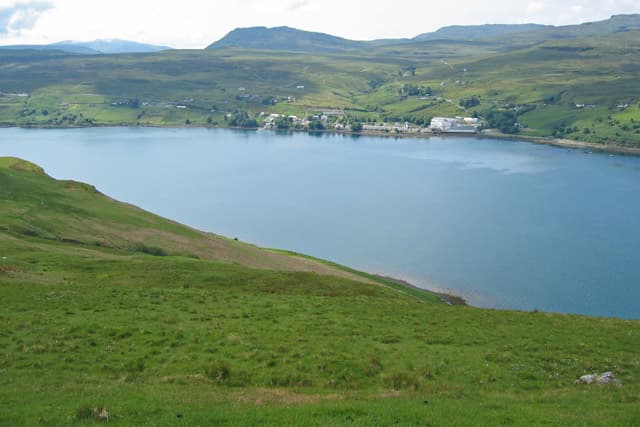
The Highlands aren't a destination — they're a category. Forty working distilleries, seven Highland towns big enough to plan around, four geographically distinct sub-regions, and an area the size of Belgium. The mistake first-time visitors make is treating it as a single trip; you can't do the Highlands in a long weekend any more than you can 'do France' in five days. Pick a cluster — the A9 corridor (Pitlochry to Inverness), the west coast (Oban + Fort William), the far north (Inverness to Wick), or the Cairngorms (Aviemore base) — and commit to it. This guide is for the trip that focuses, not the one that tries to see everything.
Why Highlands matters
The Scottish Highlands cover roughly a third of Scotland by area but hold only 7% of its population. That's the whole point: vast geography, low density, long drives, and a food and drink culture shaped by remoteness. The 40 working distilleries in the region produce more whisky than any region except Speyside — but unlike Speyside, they cluster in four geographically separated zones rather than one tight knot. Choosing which zone to visit is the first and most important planning decision.
**The A9 corridor** (Pitlochry north to Inverness, ~120 miles) is the easiest cluster. Train from Edinburgh to Pitlochry runs in 1h 45m; from there Edradour and Blair Athol are walkable, with Aberfeldy, Dalwhinnie, and Tomatin a short drive. Hire a car at Inverness and add Royal Brackla, Tomatin, and onward to the north. Three nights covers six distilleries comfortably.
**The west coast** (Oban + Fort William + Ardnamurchan) is the scenery cluster. Oban Distillery is in the town centre, walking distance from the ferry terminal. Ben Nevis Distillery near Fort William is an hour north. Ardnamurchan — newest of the three, opened 2014 — is the most ambitious modern Highland distillery and requires a Corran Ferry crossing to reach. Long weekend minimum.
**The far north** (Inverness to Wick, ~110 miles) is the most rewarding push for serious drinkers. Glenmorangie and Dalmore are 45 minutes north of Inverness; Old Pulteney, Clynelish, Wolfburn, and the new 8 Doors are 90-120 minutes further. The drive itself — the North Coast 500 route — is part of the experience. Best April through October; winter weather can close the A9 at Helmsdale.
**The Cairngorms cluster** overlaps with Speyside and offers the best non-whisky angle of the four. Aviemore as the base, food scene built around the Cairngorm Brewery, the Old Bridge Inn, and the Mountain Cafe — plus the outdoor activities (Cairngorm Mountain, Glenmore, Loch Morlich) that justify a 4-5 day stay.
Outside the clusters, the Highlands also include Skye (a separate destination conceptually — Talisker and Torabhaig distilleries are technically Islands-tagged for whisky purposes despite being in Highland Council). For travel planning, treat Skye as its own trip rather than a Highland add-on.
The region at a glance
Best for
- ✓Whisky enthusiasts beyond Speyside who want depth, not breadth
- ✓Travellers who treat the journey as the destination (North Coast 500)
- ✓Food-and-outdoors crossover trips (Cairngorms + distillery cluster)
- ✓Anyone with a 5+ day window and a hire car
Avoid if
- ✕You expect a small, walkable destination — the Highlands are 32,000 km²
- ✕You want urban food scene density (head to Edinburgh or Glasgow)
- ✕You're visiting in winter without 4WD and flexible plans (weather closures)
- ✕You don't drive — public transport reaches the main towns but not most distilleries
Compare with
- Speyside — inside the Highland boundary but treated separately — denser cluster, fruit-and-sherry focus
- Islay — island whisky region — tighter, more peated, easier to plan
- Islands whisky — Skye / Orkney / Mull / Jura whisky — overlaps the Highland Council area geographically
Highlands distilleries worth visiting
All 40 working Highland distilleries are scattered across an area larger than Belgium. The picks below are the 14 most visitor-relevant — chosen for tour quality, location within a coherent cluster, and the editorial work in our whisky region deep-dive. Use them as starting points for whichever sub-region you've chosen, not as a complete checklist.
Oban
balanced-maritime
Tours from £24
Glenmorangie
fragrant-fruity
The Dalmore
rich-sherried
Tours from £250
GlenDronach
rich-sherried
Tours from £25
Aberfeldy
honeyed-rich
Edradour
rich-sherried
Clynelish
waxy-coastal
Old Pulteney
coastal-briny
Ardnamurchan
varied-experimental
Glengoyne
light-sherried
Tours from £25
Dalwhinnie
honeyed-light
Tours from £14
Ben Nevis
rich-complex
Tomatin
fruity-light
Tours from £20
Royal Lochnagar
light-honeyed
Tours from £15
| Distillery | Style | Tour from | Peat |
|---|---|---|---|
| Oban | balanced-maritime | £24 | Lightly |
| Glenmorangie | fragrant-fruity | Check direct | Unpeated |
| The Dalmore | rich-sherried | £250 | Unpeated |
| GlenDronach | rich-sherried | £25 | Unpeated |
| Aberfeldy | honeyed-rich | Check direct | Lightly |
| Edradour | rich-sherried | Check direct | Two |
| Clynelish | waxy-coastal | Check direct | Lightly |
| Old Pulteney | coastal-briny | Check direct | Lightly |
Where to eat in Highlands
Highland restaurants of note are scattered — there's no single dining cluster like Edinburgh's Leith. The picks below are concentrated in or near Inverness (the practical Highland base) and on the west coast / Cairngorms route, where geography lets visitors string several together. Book ahead at the named restaurants — capacity is small and bookings tighten in summer.
The Cross at Kingussie
Long-running Cairngorms standard — five-course dinner menu changes daily, eight rooms above the restaurant. The textbook Highland 'restaurant with rooms' experience.
Number 1 Bridge Street
Inverness's most-praised restaurant — modern Scottish menu with strong Highland sourcing. Compact, contemporary, walking distance from the train station.
The Mustard Seed
Riverside Inverness bistro that's been the city's default special-occasion choice for over 20 years. Reliable, generous, with a private dining room.
Etive
Small-plates restaurant on Oban's seafront — Highland-sourced ingredients, local seafood, intimate room. The serious-dining choice in Oban when the chains don't cut it.
The Pierhouse
Argyll-Highland border — seafront restaurant with rooms, sustainable Scottish seafood (sourced from boats arriving at the pier outside). A 25-minute drive from Oban.
The Old Bridge Inn
Cairngorms' default decent pub-restaurant — local beef and venison, Cairngorm Brewery beer on tap, walking distance from the Strathspey railway station. Good before or after a Cairngorm Mountain day.
Eat, drink and shop in Highlands: from our guides
1 places named in TasteSCOT’s published guides to Inverness. Every card links to the article that recommends it.
Drink
The Clachnaharry Inn
PubClachnaharry, on the canal · Inverness
A waterside pub with three or four cask ales and food.
Producers worth knowing
Highland farm shops and specialist producers are scattered — the big two for visitors are House of Bruar (a destination farm shop on the A9 near Pitlochry) and Connage Highland Dairy (near Inverness). Beyond those, the Cairngorm and Black Isle breweries anchor the craft beer scene.
Specialist shops
House of Bruar
Bruar, A9 (Pitlochry)
The largest independent food hall in Scotland — game butchery, cheese counter, smokehouse, bakery, and tartan shop alongside. On the A9, a natural lunch stop on any Highland trip.
Hugh Roberts Butcher
Inverness
Long-established Inverness butcher specialising in Highland beef, venison, and game. The professionals' choice for Highland-sourced meat in the city.
Craft beer & spirits in Highlands
The Highland craft drinks scene is concentrated around Aviemore (Cairngorm Brewery) and the Black Isle (Black Isle Brewing near Inverness). New-wave Highland gins — Rock Rose (Dunnet Bay, far north coast), Avva (Aberdeenshire-Highland border), Arbikie's Kirsty (vacuum-distilled, Inchture), Kinrara (Cairngorms) — are among the most interesting in Scotland.
Breweries
Towns to visit in Highlands
Pick a base. Each of these towns has a TasteSCOT food guide; many also appear on our sister sites with travel and companion content — natural next reads when you’re planning a trip.
Inverness
The Highland capital — gateway to Speyside and the northern distilleries
Fort William
Lochaber's hub — Ben Nevis, the West Highland Way, and Ben Nevis Distillery
Aviemore
Cairngorms gateway — Speyside Distillery, Cairngorm Brewery, and the outdoor capital
Portree
Skye's hub — Talisker, Skye Brewing, and the island's iconic food culture
Wick
Caithness coast — Old Pulteney Distillery, herring heritage, and Scotland's far north
Ullapool
NW Highland coast — Stornoway ferry port and the Seafood Shack
Lochinver
Assynt fishing village — Lochinver Larder's pies and far-NW Highland scenery
Markets & events in Highlands
The Highland Council area is too thinly populated for weekly farmers markets, but three monthly markets run reliably — Inverness, Nairn, and Fort William.
What’s distinctively Highlands
Highland beef and lamb
Aberdeen-Angus cattle and Highland-breed cattle are the regional benchmark for Scottish beef. Look for native-breed designations on restaurant menus (The Cross at Kingussie, Number 1 Bridge Street). Highland lamb is typically heather-fed in the upland glens — drier, more concentrated flavour than lowland lamb.
Highland venison and game
The Highlands hold most of Scotland's wild red deer, plus roe deer and game birds (grouse, ptarmigan, partridge). Game season runs broadly August-February depending on species. Hugh Roberts in Inverness and the House of Bruar butchery are the two main retail sources; rural restaurants often source direct from estates.
Northern Highland coastal whisky
Glenmorangie, Dalmore, Old Pulteney, Clynelish, Balblair — all share a coastal Northern Highland character. Often waxy or oily in texture (Clynelish is the archetype), often with a citrus or tropical-fruit thread (Glenmorangie), often lightly briny (Pulteney). Distinct from Speyside's fruit-and-sherry focus and Islay's heavy peat.
Cairngorm Mountain Brewery
Cairngorm Brewery in Aviemore is the Highland's best-distributed craft brewery — Trade Winds, Black Gold, Highland IPA stocked across most Highland pubs and shops. The brewery tour is a good half-day for non-whisky drinkers visiting Cairngorms.
Scottish salmon and trout
Highland rivers — the Spey, Findhorn, Dee, Tay (technically Perthshire/Highland border), Beauly, Cassley — produce wild Scottish salmon and sea trout. Wild salmon is scarce and expensive; farmed Scottish salmon is widely available and the Highland's main aquaculture product.
When to visit Highlands
Highland's tourism season is sharply seasonal — most distilleries and many rural restaurants close or reduce hours November through March. The window for a proper Highland trip is April through October. Within that, peak is June-August (warmer, drier, busier, midges in the west), and the shoulders (May and September) are the best balance of weather, availability, and price.
Visit in late September. Long enough daylight to drive scenic routes (8-9 hours), midges declining, distillery staff unhurried, autumn colours starting in the Cairngorms, accommodation prices off peak. The combination doesn't exist anywhere else in the Scottish year.
Where to stay in Highlands
Pick your base by cluster. Inverness for the A9 corridor + far north + Northern Highland coast. Aviemore for Cairngorms (plus the Speyside doorstep). Oban or Fort William for the west coast. Pitlochry for the southern A9 cluster. Don't try to base in one town for the whole region — drives are too long.
The map is centred on a Highlands food and drink trip — set your dates on it, or go straight to hotels, B&Bs and self-catering through the providers underneath.
Booking links are affiliate links — we earn a small commission at no extra cost to you.
Luxury
Best for the A9 + far-north + northern coastal cluster. Walking distance to Number 1 Bridge Street and the Mustard Seed.
Country house hotel with a Michelin-starred history — east of Inverness on the Nairn road.
Best value
Family-friendly Cairngorms base — adjacent to the Strathspey Railway, easy access to Cairngorm Mountain.
Boutique guesthouse with strong food provenance — between Aberdeenshire and Speyside, good base for the eastern Highland fringe.
Best for distillery proximity
Eight rooms above the restaurant — the Cairngorms restaurant-with-rooms experience. Walking distance to Strathspey rail trail.
Best for families
Bigger rooms, pool access, outdoor activity programmes — best for families with young children.
Best self-catering
The standard Highland trip for groups of 4+. Aviemore, Cairngorms, Wester Ross, Sutherland — pick the cluster and book weekly.
Getting to Highlands
A9 direct via Perth and Aviemore
A82 to Oban / Fort William; M9-A9 via Stirling for the north and east
A96 west to Inverness; A93 via Braemar for the eastern Highland (Royal Lochnagar)
LNER + Caledonian Sleeper or fly LCY/LGW direct to Inverness
The natural Highland hub. Short flights from London (LCY, LGW), Birmingham, Manchester, plus seasonal European routes.
Better for the eastern Highland cluster and Cairngorms.
More international connections; longer drives north. Used by most international visitors.
Limited but functional for the main towns. ScotRail runs the Highland Main Line (Edinburgh/Glasgow → Pitlochry → Aviemore → Inverness, ~3 hours total) and the Far North Line (Inverness → Tain → Wick, 4 hours). The West Highland Line runs Glasgow → Fort William → Mallaig. Beyond the trains, ScotRail buses cover most towns. But for distilleries, farm shops, and rural restaurants you need a car — public transport simply doesn't reach most of them. The North Coast 500 driving route around the far Northern Highlands is best done in a hire car or campervan.
How to plan a Highlands trip
A9 corridor long weekend (3 days)
3 daysEasy — A9 + train accessible· Best for: First Highland trip from Edinburgh
A9 corridor long weekend (3 days)
- FridayTrain Edinburgh → Pitlochry (1h 45m). Walk to Edradour for an afternoon tour (45 min from station). Dinner at Pitlochry. Stay Pitlochry.
- SaturdayMorning at Aberfeldy (30 min drive). Lunch at Habitat Cafe. Afternoon at Dalwhinnie (50 min north). Drive to Inverness (1h 15m). Dinner at Number 1 Bridge Street.
- SundayDrive 45 min north to Glenmorangie and Dalmore (book ahead — same morning slot is possible). Lunch at Connage Highland Dairy cafe. Drive back to Inverness, flight or train home.
Far north 5 days (NC500-lite)
5 daysModerate — single-track roads, long drives· Best for: Whisky enthusiasts wanting the coastal cluster
Far north 5 days (NC500-lite)
- Day 1Fly to Inverness. Hire car. Drive 45 min north to Glenmorangie and Dalmore (back-to-back). Stay Tain or Dornoch.
- Day 2Continue north to Clynelish (Brora) — limited tour slots, book ahead. Lunch at the Coast Restaurant in Brora. Afternoon: Wolfburn (Thurso). Stay Thurso.
- Day 3Old Pulteney distillery (Wick) — morning. Lunch in Wick. Afternoon: 8 Doors distillery at John o' Groats. Stay Wick.
- Day 4Drive west across Caithness/Sutherland coast — A836/A838 north coast (NC500 stretch). Lunch at Smoo Cave Hotel (Durness) or Tongue Hotel. Stay Ullapool or Lochinver.
- Day 5Drive south through Wester Ross to Inverness (3h with stops). Lunch at Loch Maree Hotel. Inverness onward — train or flight home.
Cairngorms food + outdoors (4 days)
4 daysEasy — Aviemore base, short drives· Best for: Families and non-whisky-focused visitors
Cairngorms food + outdoors (4 days)
- Day 1Drive or train Edinburgh/Glasgow → Aviemore (2.5h drive or train). Check into accommodation. Lunch at the Old Bridge Inn. Afternoon: walk Loch Morlich (15 min east of Aviemore). Dinner at The Cross at Kingussie (book ahead — 20 min south).
- Day 2Morning: Cairngorm Mountain — funicular up, walk down, or full hike if conditions allow. Lunch at the Mountain Cafe (Aviemore). Afternoon: Cairngorm Brewery tour (book ahead). Dinner in Aviemore.
- Day 3Drive 1h to Dalwhinnie Distillery (book ahead) — half-day tour. Lunch on-site. Afternoon: drive back via Strathspey Railway for a vintage steam-train experience. Dinner at the Old Bridge Inn.
- Day 4Morning at Speyside (45 min east) — visit Aberlour or Glenfiddich. Lunch at the Mash Tun (Aberlour). Late afternoon drive back south, home.
Map
Highlands FAQ
+What's the difference between Highland and Speyside whisky?
Speyside is technically inside the Highland region — it's the dense cluster of distilleries around the River Spey in Moray. Speyside whisky tends toward fruit-and-sherry sweetness; Highland whisky outside Speyside covers everything else — coastal, peated, heather-honey, sherried. Highland is the parent category; Speyside is the most famous slice of it.
+How big are the Highlands?
The Highland Council area covers about 32,000 km² — bigger than Belgium, about the size of Maryland. The drive from Pitlochry (southern A9 entry) to Wick (far north-east corner) is over 200 miles and takes more than 4 hours without stops. Don't underestimate the geography when planning.
+Which Highland distillery should I visit first?
Depends on where you're coming from. From Glasgow or Edinburgh: Oban (train accessible, distillery in town centre, full day-trip with no driving). From Inverness: Glenmorangie (45 minutes north, well-organised tours, the most recognisable Highland malt). From the south: Edradour at Pitlochry (45 minutes from the train station, intimate traditional production).
+Can I do the Highlands without a car?
Partially. The Highland Main Line (Edinburgh/Glasgow → Pitlochry → Aviemore → Inverness) and Far North Line (Inverness → Thurso) reach the main towns. From Pitlochry station you can walk to Edradour, Blair Athol, and the Highland Hotel. From Inverness you can train onward to Tain (for Glenmorangie nearby) or Brora (for Clynelish). But most distilleries and rural farm shops are not reachable by public transport — a car expands the options dramatically.
+When should I visit the Highlands?
April through October. May and September are the shoulder-season best months — long daylight, mild weather, fewer crowds. June-August is peak (busier, warmer, midges in the west). Avoid November-March unless you specifically want winter scenery — many distilleries reduce hours or close, weather can disrupt routes, daylight is short.
+What are Highland midges and how do I deal with them?
Highland midges are tiny biting insects active May through September, especially in the west and in wet/still weather at dawn and dusk. They concentrate in moisture-rich habitats (lochs, bogs, riverbanks). For outdoor visits: long sleeves, midge repellent (Smidge is the local favourite), and a head net at the worst times of day. Cities and east-coast distilleries are largely midge-free.
+Is Skye part of the Highlands?
Geographically yes — Skye is in Highland Council. For whisky classification, however, Skye distilleries (Talisker, Torabhaig) are tagged as Islands, not Highland. For travel planning, we recommend treating Skye as its own trip rather than a Highland add-on — Skye is large and busy enough to fill a 3-day visit on its own.
+What's the North Coast 500 and is it worth doing?
The NC500 is a 500-mile driving route around the far northern Highlands (Inverness → west coast → north coast → east coast → Inverness). Popular since 2015, it can be very busy in peak summer (campervan congestion is a real issue). Worth doing if you allow 5-7 days, book accommodation well ahead, and accept that some single-track stretches will be slow. Best done in May-June or September; avoid late July and August if you want anything resembling solitude.
Hillwalking and wild swimming around Highlands
Our sister site OutdoorSCOT covers Munros, Corbetts, mountain biking, wild camping, sea kayaking and bothies across the same geography — the outdoor counterpart to the food and drink on this page.
Explore the outdoor side
Related regions
Speyside
Inside the Highland boundary but treated as its own region — denser distillery cluster, fruit-and-sherry style.
Islay
The whisky island — small, remote, peated. Different trip entirely.
Edinburgh & Lothians
The urban opposite — restaurant capital, weekly markets, walkable.
Highland whisky region
The whisky-only depth-page: every Highland distillery, sub-regional styles, comparison.
Last updated 17 May 2026
How we score →This page contains affiliate links. We earn from qualifying purchases at no cost to you. All recommendations are independent and unsponsored.