Langoustine
Nephrops norvegicus
Last updated 15 May 2026
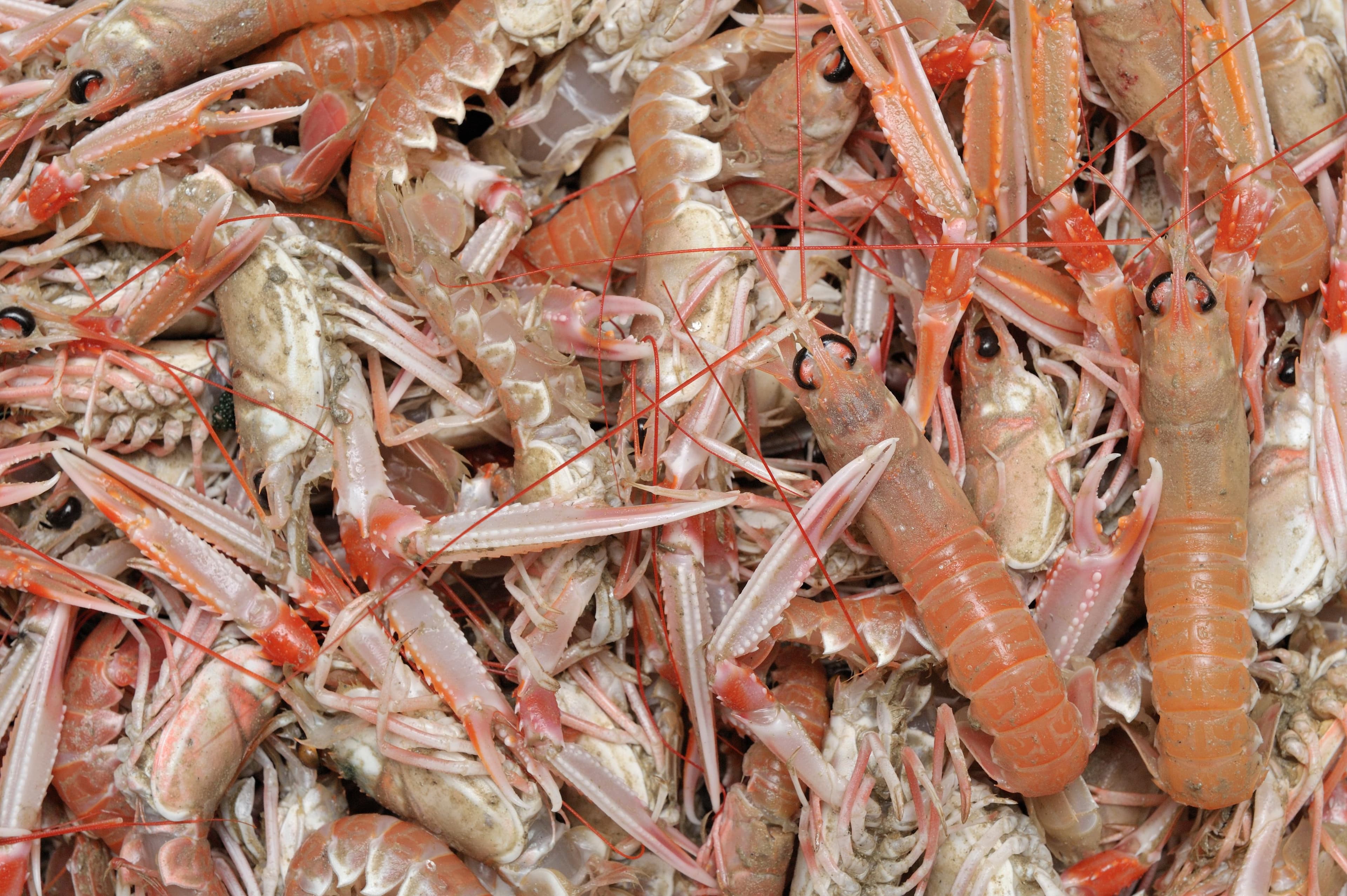
Scotland’s most valuable seafood export — and, bafflingly, a product most Scots have never eaten. Also called Dublin Bay prawns, Norway lobster, or scampi in its cheapest incarnation. Fresh, whole langoustines landed on the west coast are one of the great seafood experiences in the world.
At a glance
MCS 2 means "Think about it" — generally a reasonable choice with some concerns. Scottish creel-caught langoustines from the West Coast are the most sustainable option (effectively MCS 1). Trawled langoustines from the North Sea score worse due to seabed damage and bycatch.
Best choice: Buy creel-caught from the West Coast (Loch Torridon, Minch). The fishing method is gentler on the seabed and the langoustines themselves are typically larger and undamaged.
Avoid: Avoid imported langoustines from outside UK waters — frequently mislabelled and almost always trawled. Avoid pre-cooked frozen "scampi" — it's a different product entirely (overprocessed, mostly imported).
Seasonality
Compare every Scottish species month by month in the seasonal seafood calendar.
Best quality: Best quality July–August when waters are warmest. Meatiest specimens, sweetest flavour.
Best value: Cheapest in September–October as supply peaks. Avoid January–February when prices spike 30–40%.
Frozen: Frozen-at-sea is excellent value November–February. Quality is genuinely good — typically 30% cheaper than fresh.
How to buy
- Firm, glossy shells
- Tightly curled tail (was alive when cooked)
- Fresh sea smell — never ammonia
- Clear, black eyes (cloudy = old)
- No black spots on shell
- Pre-frozen breaded 'scampi' — overprocessed and usually imported
- Soft or discoloured shells
- Ammonia smell (a clear sign of bacterial spoilage)
- Limp, uncurled tails
- Anything labelled 'langoustine-style' or 'flavoured'
Fresh vs frozen: Fresh is better May–September when supply is high. Frozen-at-sea langoustines are excellent quality November–March and typically 30% cheaper — quality is genuinely good if frozen on the boat within hours of catch.
Where to buy
Supermarkets: Rarely available fresh in supermarkets. Waitrose occasionally stocks whole langoustines (£35/kg). Morrisons fish counter sometimes has them. Most supermarket "langoustines" are frozen tails.
How much to buy
Roughly 30% of whole langoustine weight is edible tail meat. A 1kg bag of whole langoustines yields about 300g of meat.
Storage
Fridge: Cook on day of purchase. If you must store, on ice in the fridge for max 24 hours.
Freezer: Up to 3 months. Freeze whole in their shells for best results. Thaw slowly in fridge overnight.
Thawing: Thaw in fridge overnight (8–12 hours). Never thaw at room temperature or in warm water — causes mushy texture.
How to prepare
Twist the head away from the tail with a firm rotation. Keep the heads for stock — they're full of flavour.
Squeeze the sides of the tail shell to crack it, then peel away the shell segments. The meat should come out in one piece.
Run a small knife along the back of the tail meat and remove the dark digestive tract. Not essential for flavour but improves appearance.
Crack the claws with the back of a knife. The claw meat is small but sweet — worth the effort for salads and pasta.
- →Use kitchen scissors to cut through the shell — easier than peeling by hand
- →Save every shell and head — they make extraordinary stock and bisque
- →If cooking whole, snip the tips of the claws so they don't trap water
Prep time: 5 minutes for basic shelling. 15 minutes to prep a full kg including deveining.
Cooking methods
Split lengthways. Brush with garlic butter. Grill cut-side down for 2 minutes, flip, baste, grill 1 minute more. The shell chars and the meat just firms. Don't overcook — they go rubbery in seconds.
The classic way. Maximum flavour.
Bring a large pot of heavily salted water to a rolling boil. Drop langoustines in. Cook 2 minutes for medium, 3 for large. Plunge into ice water immediately. Serve with lemon and mayo.
Simplest method. Purists prefer this.
Shell and devein tails. Sear in hot butter for 60–90 seconds per side. Season with salt, lemon, and a whisper of garlic. Don't move them once they hit the pan.
Quick weeknight dinner. Works with frozen tails too.
Steam over boiling water for 4–5 minutes until shells turn bright orange. More gentle than boiling — retains more flavour and moisture.
Most delicate result. Best for eating with fingers.
Shell raw tails. Slice thinly. Dress with olive oil, lemon juice, sea salt, and a pinch of chilli. The sweetness of raw langoustine is extraordinary — but only with sashimi-grade fresh specimens.
Adventurous eaters. Only with the freshest catch.
- Overcooking — langoustines need 2–3 minutes max. They go rubbery instantly.
- Not salting the boiling water enough — it should taste like the sea
- Throwing away the heads — they're the best part for stock and bisque
- Cooking from frozen without thawing — uneven cooking, mushy texture
Recipes
Grilled Langoustines with Garlic Butter
- · 12 whole langoustines
- · 50g butter
- · 2 cloves garlic (minced)
- · Handful of parsley (chopped)
- · 1 lemon
- · Sea salt
- · Black pepper
- Split langoustines lengthways with a sharp knife.
- Melt butter with garlic over low heat for 2 minutes.
- Brush cut side of langoustines with garlic butter.
- Grill cut-side down under a hot grill for 2 minutes.
- Flip, baste generously with more butter, grill 1 more minute.
- Serve immediately with lemon wedges and crusty bread.
Don't overcook. The moment the flesh turns opaque, they're done. Ten seconds too long and they're rubber.
Pairs with: Chablis or a dry Scottish white (Cairn o' Mohr)
Langoustine Bisque
- · Shells and heads from 1kg langoustines
- · 1 onion (chopped)
- · 1 carrot (chopped)
- · 2 tbsp tomato purée
- · 100ml dry white wine
- · 500ml fish stock
- · 100ml double cream
- · 1 tsp paprika
- · 1 bay leaf
- Roast shells and heads at 200°C for 10 minutes.
- Sauté onion and carrot in butter until soft.
- Add tomato purée, white wine, fish stock, roasted shells, paprika, and bay leaf.
- Simmer for 25 minutes.
- Blend everything in batches, then strain through a fine sieve.
- Return to pan, finish with double cream, season, and serve.
This is why you save every shell and head. The flavour is extraordinary — a £5 batch of shells makes a bisque that costs £15 in a restaurant.
Pairs with: Dry sherry (Manzanilla) or a fuller-bodied Chardonnay
Langoustine Pasta with Chilli and Lemon
- · 200g linguine
- · 8 langoustine tails (shelled and deveined)
- · 2 garlic cloves (sliced)
- · 1 red chilli (finely chopped)
- · Zest of 1 lemon
- · 4 tbsp olive oil
- · Handful of parsley (chopped)
- · Sea salt and black pepper
- Cook the linguine in heavily salted boiling water until al dente.
- In a separate pan, sauté garlic and chilli in olive oil over medium heat for 1 minute.
- Add langoustine tails and cook for 60–90 seconds per side.
- Drain pasta (saving a splash of cooking water) and add to the langoustines.
- Toss with lemon zest, parsley, and a splash of pasta water. Season and serve.
Don't add the langoustines until the pasta is nearly done. They cook faster than the pasta drains.
Pairs with: Vermentino or Pinot Grigio
Cook it in
Scottish dishes langoustine belongs in, and why.
Serve with
Keep it simple. Langoustine doesn't need much — bread, butter, lemon. The less you add, the more the shellfish speaks.
Drink pairings
Langoustine is delicate — don't overpower it with heavily peated whisky or full-bodied red wine.
Nutrition per 100g
Very high protein, almost zero fat. One of the healthiest protein sources available. Rich in selenium, zinc, and B12.
Allergen
Langoustine is a crustacean shellfish — one of the 14 major UK allergens. Contains: Crustaceans. Allergen info varies by supplier — always confirm with your seller, especially if buying prepared / sauced product.
Langoustine is the most undervalued ingredient in Scotland. It's sweeter than lobster, cheaper than lobster, and caught in Scottish waters — yet most Scots have never eaten one because the supply chain ships everything to continental Europe. Buying directly from a Scottish supplier and cooking them at home is genuinely one of the best food experiences available in this country. Stop buying imported prawns. Start buying Scottish langoustines.
Scotland catches 60% of the UK's langoustines, mostly off the west coast. The vast majority are exported live to Spain, France, and Italy — where they're considered a delicacy. Most Scots have never eaten a fresh langoustine, which is extraordinary. The supermarket prawn cocktail won, and Scotland's best shellfish gets shipped abroad.
- · A langoustine can live for up to 15 years
- · They're nocturnal — that's why creels are set overnight
- · The Norwegian name is "sjøkreps" (sea crayfish)
- · Their scientific name (Nephrops norvegicus) means "Norway lobster"
Langoustine vs…
Langoustine is sweeter and more delicate than lobster. Roughly 40% of the price for 80% of the experience. Lobster has more meat per animal but langoustine meat is finer-textured.
King prawns are milder and firmer. Langoustines are sweeter and more complex. Most supermarket 'prawns' are imported — langoustines are local.
Different experience entirely. Crab meat is denser and richer. Langoustine is delicate and sweet. Both are in season summer. Crab is better value per kg of meat.
Frequently asked questions
What is the difference between langoustines and prawns?
Langoustines are a species of lobster (Nephrops norvegicus), not a prawn. They have claws, a harder shell, and sweeter, more delicate meat. Most 'prawns' in UK supermarkets are imported tropical species. Langoustines are local, wild-caught, and a completely different eating experience.
How many langoustines per person?
As a starter: 6–8 whole langoustines per person. As a main course: 12–15. Roughly 30% of whole weight is edible tail meat, so budget 200–300g of whole langoustines per person.
Can you eat langoustines raw?
Yes — langoustine crudo (raw, thinly sliced, dressed with olive oil and lemon) is increasingly popular in Scottish restaurants. Only use sashimi-grade fresh specimens from a trusted supplier. Never eat raw langoustines that have been previously frozen.
How long do you cook langoustines?
2–3 minutes. That's it. Boiled: 2 minutes in heavily salted water. Grilled: 2–3 minutes per side. Pan-fried tails: 60–90 seconds per side. Overcooking is the single most common mistake — they go rubbery in seconds.
Where can I buy fresh langoustines in Scotland?
Rarely in supermarkets. Order online from specialists: Fish Brothers (Fraserburgh), The Puffer (Loch Fyne), George Campbell & Sons (Perth). In person: harbour-side fishmongers on the west coast (Oban, Mallaig, Ullapool) often sell live langoustines straight off the boat.
Are langoustines sustainable?
Creel-caught Scottish langoustines score MCS 2 ('Think about it') — a reasonable choice with some concerns. Creel/pot-caught from the West Coast is the most sustainable option. Trawled langoustines have higher environmental impact due to seabed damage and bycatch.
Why are langoustines so expensive?
Export demand — Spain, France, and Italy pay premium prices for live Scottish langoustines. What's left for the UK market is limited. Creel-caught langoustines cost more because the fishing method is labour-intensive but more sustainable. At £25–45/kg, they're still roughly 40% cheaper than lobster.
What wine goes with langoustines?
Crisp, mineral white wines: Chablis, Muscadet, dry Riesling, or Albariño. Avoid oaky Chardonnay — it overpowers the delicate sweetness. For whisky: Oban 14 or Old Pulteney 12 (light, coastal malts).
How much does langoustine cost per kg in the UK?
Fresh Scottish langoustine typically costs £25–£45 per kg from a fishmonger, depending on size, season and how it's prepared. Per portion that works out around £8–15 per person as a starter (6–8 langoustines). £15–25 per person as a main (12–15 langoustines).. Cheapest in September–October as supply peaks. Avoid January–February when prices spike 30–40%.
More species guides
Cod (North Sea)
The backbone of Scottish fish and chips. North Sea cod has been through stock collapse and recovery cycles; look for MSC-certified Icelandic or Barents Sea if you’re unsure about provenance.
Scottish Salmon
Scotland’s most exported food product by value. Virtually all salmon you buy is farmed — wild Atlantic salmon is critically endangered and mostly reserved for catch-and-release sport fishing. Look for RSPCA Assured or organic labels for higher welfare.
Native Oyster
The traditional British native oyster is in season when there’s an ‘R’ in the month. Loch Ryan is the last commercially active native oyster bed in Scotland. Meatier, more metallic, and more characterful than the common Pacific rock oyster.
Mackerel
Cheap, sustainable when line-caught, and a brilliant introduction to oily fish cookery. Scottish line-caught mackerel in late summer is one of the best value food items in the country.
King Scallop
Hand-dived scallops from the west coast are one of Scotland’s premier luxuries. Much better than dredged, with zero seabed damage and notably plumper meat. Pay the extra.
Brown Crab
Scotland's most important crab species and the meaty workhorse of British shellfish cookery. UK-creel-caught brown crab has one of the best sustainability profiles of any commercial seafood — low-impact pot fishing, healthy stocks. White claw meat is sweet and firm; brown body meat is rich and intense.
Where to eat langoustine in Scotland
Open-sided shack on the Oban quayside. Langoustines straight off the day boats, served grilled with garlic butter or simply boiled. Cash, queue, no reservations — and worth the wait.
Visit siteThe original (not the chain). Langoustines from their own boats on Loch Fyne; can also buy raw to take home. Combine with a Fyne Ales brewery visit — 5 min away.
Visit siteRoy Brett's George IV Bridge restaurant. Langoustine served as a starter with mayonnaise or in a hot kitchen preparation. Edinburgh's most-decorated seafood room.
Visit siteGlass-walled dining room over the West Sands. Langoustines from Anstruther creels, served grilled with herb butter. Book ahead in summer.
Visit siteLangoustine tails battered and fried — the West Coast take on fish and chips. Casual, takeaway, excellent.
Billy Boyter's tasting menu features langoustine from the boats moored 50 metres away. Single most-elevated treatment of the species in Scotland.
Visit siteRelated articles
9 min read
How to Cook Langoustines at Home
Scotland catches most of the UK's langoustines — then exports 80% to Europe. Here's how to buy them locally, what to pay, and four simple ways to cook them at home.
6 min read
Langoustine vs Lobster: Taste, Price & Which to Buy
The honest answer: langoustines are sweeter, easier to eat and about half the price; lobster gives you more meat and the bigger occasion. Which to buy, when.
6 min read
Langoustine vs Prawn: Is a Langoustine a Prawn or Lobster?
A langoustine (Nephrops norvegicus) is not a prawn: it is a small clawed lobster, also sold as Norway lobster, Dublin Bay prawn or scampi. How they differ.
Some links on this page are affiliate links. TasteSCOT may earn a small commission at no extra cost to you. Langoustine is a major allergen — see allergen advice above.If you drink, please drink responsibly.