Brown Crab
Cancer pagurus
Last updated 16 May 2026
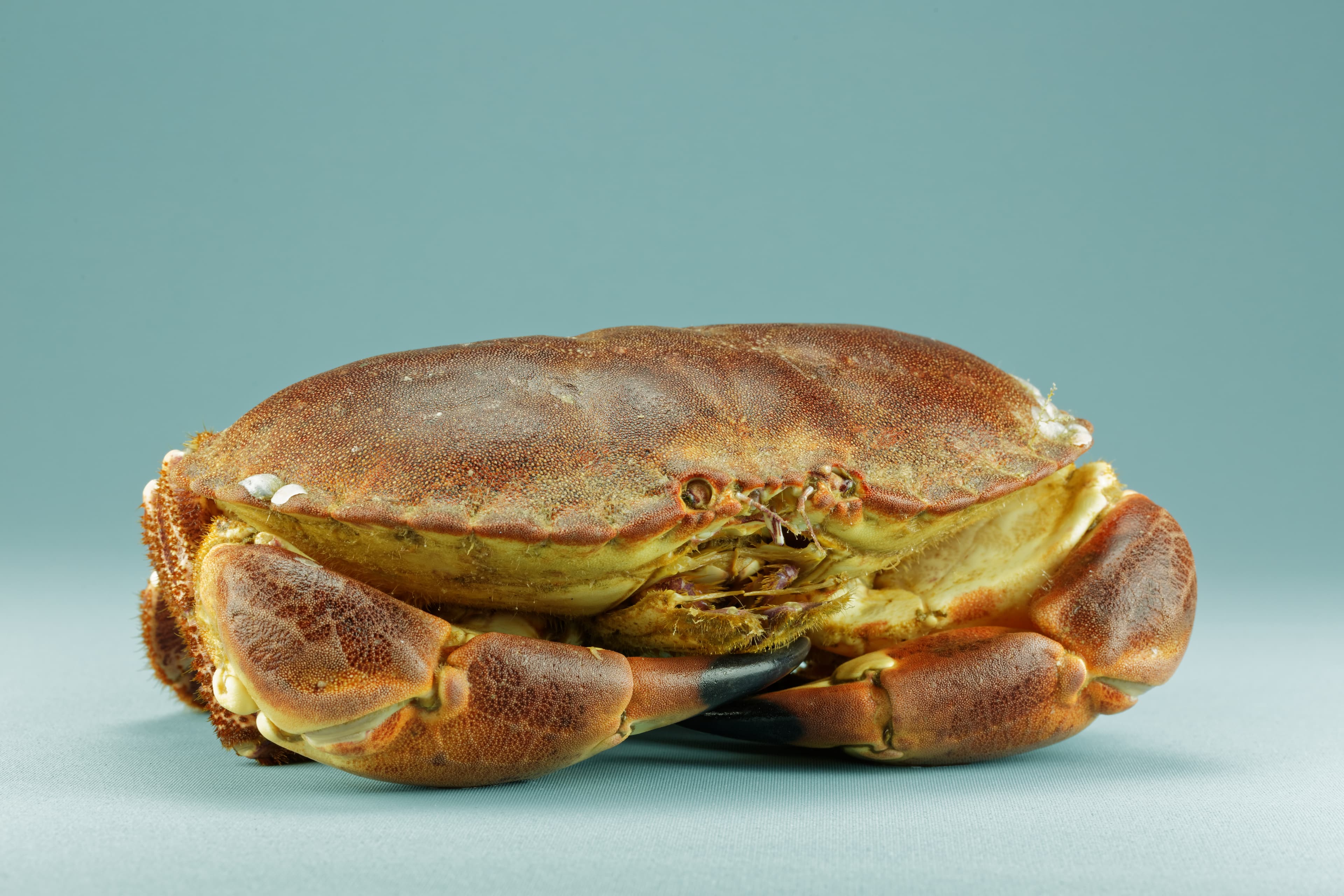
Scotland's most important crab species and the meaty workhorse of British shellfish cookery. UK-creel-caught brown crab has one of the best sustainability profiles of any commercial seafood — low-impact pot fishing, healthy stocks. White claw meat is sweet and firm; brown body meat is rich and intense.
At a glance
Brown crab scores MCS 2 — a reasonable choice. Creel-caught from Scottish waters is sustainable; the main concerns are over-fishing of certain inshore grounds. Buy live or whole-cooked from Scottish boats.
Best choice: Live crab from a local Scottish fishmonger or harbour. Whole-cooked from a small creel-fishing operation is the next-best option.
Avoid: Avoid 'Scottish brown crab meat' tubs of dubious origin — much imported crab meat is mislabelled. Always check the country of origin on processed crab meat.
Seasonality
Compare every Scottish species month by month in the seasonal seafood calendar.
Best quality: Best quality May–September when crabs are full of meat. June–August is peak — heaviest crabs, most brown meat.
Best value: Cheapest July–August. Avoid winter when crabs are lean and prices for premium crab spike.
Frozen: Frozen crab claws are decent value year-round. Picked white meat in pots is convenient but expensive — buy whole and pick yourself for far better value.
How to buy
- Heavy for its size (light = lean and watery)
- Tightly closed legs and claws
- Sweet, faintly oceanic smell
- No movement (cooked) but firm not floppy
- Live: vigorous response when picked up
- Light, hollow-feeling crabs (lean, little meat)
- Dull-coloured cooked crabs (long-cooked or old)
- Slimy claws or off-smelling shell
- Pre-picked supermarket crab meat of unknown origin
- Crab meat in tubs without provenance information
Fresh vs frozen: Live or freshly cooked is best. Frozen claws are good value year-round and the meat quality is decent. Pre-picked tub crab meat is convenient but you pay heavily for someone else's labour.
Where to buy
Supermarkets: Waitrose stocks whole cooked crab (£15–20 each) and picked white meat (£8 per 100g). Most supermarket "crab meat" is mixed white/brown and frequently imported.
How much to buy
Yields vary — winter crabs and males have less meat than full-bodied summer hens. The brown meat is in the body shell, white meat in the claws and legs.
Storage
Fridge: Cooked whole: 2 days in the fridge. Picked meat: 24 hours. Live: cook same day.
Freezer: Picked meat freezes well for up to 3 months. Whole cooked crab loses texture if frozen.
Thawing: Thaw frozen meat in fridge overnight. Use within 24 hours.
How to prepare
Twist them off at the body. The legs and claws contain the white meat.
Lay the crab on its back. Pull the body up and away from the back shell.
The grey-feathery gills along the body are inedible. Pull them off and discard.
Spoon out the brown meat from the back shell. Save it — it's the most flavourful part of the crab.
Use the back of a heavy knife or a crab cracker. Pick out the white meat in clean chunks.
Use a teaspoon or skewer to pick white meat from the body cavities. Slow but rewarding.
- →Allow 30 minutes to pick a whole crab properly
- →Save the back shell — it makes a good serving vessel
- →Save the picking liquor — adds flavour to crab pasta or a sandwich
Prep time: 30 minutes to pick a 1.2kg whole cooked crab cleanly. Faster with practice.
Cooking methods
Bring heavily salted water to a rolling boil. Place crab in head-first. Boil 15–18 minutes for a 1.2kg crab. Plunge into ice water immediately. Pick when cool enough to handle.
Best flavour. Cook fresh crab the day you buy it.
Already-cooked crab needs no further cooking. To warm picked meat, sauté in butter for 1–2 minutes. Don't boil — it goes rubbery.
Most weeknights. Buy already cooked.
Steam over boiling water for 20–25 minutes. Slightly more delicate result than boiling but more time.
Avoiding salt absorption from the boiling water.
Mix picked white meat with mayo, lemon, and chives. Pile onto buttered sourdough. Top with picked brown meat. Black pepper.
The classic Scottish summer lunch.
- Boiling for too long — 15–18 minutes for a 1.2kg crab. Past 20 the meat goes tough.
- Discarding the brown meat — it's the most flavourful part.
- Reheating picked meat in boiling water — goes rubbery and watery.
- Buying lean winter crabs — pay attention to weight relative to size.
Recipes
Classic Scottish Crab on Toast
- · 200g picked crab meat (mixed white and brown)
- · 2 tbsp mayonnaise
- · Juice of half a lemon
- · 1 tbsp chopped chives
- · 4 thick slices sourdough
- · 50g butter
- · Sea salt and black pepper
- · Cayenne pepper (optional)
- Mix white crab meat with mayo, lemon juice, chives, and a pinch of salt.
- Toast the sourdough and butter generously.
- Pile crab mix onto the toast.
- Top with a spoonful of brown meat.
- Black pepper, cayenne if you like, more lemon.
Don't over-mix. Keep the white meat in chunks for texture.
Pairs with: Sancerre or a dry Riesling
Crab Linguine with Chilli and Lemon
- · 200g linguine
- · 200g picked crab meat
- · 2 garlic cloves (sliced)
- · 1 red chilli (chopped)
- · Zest and juice of 1 lemon
- · 4 tbsp olive oil
- · Handful of parsley
- · Sea salt
- Cook linguine in heavily salted water until al dente.
- Sauté garlic and chilli in olive oil for 1 minute.
- Add brown crab meat and stir to combine.
- Drain pasta, save a splash of cooking water. Add to the pan.
- Add white crab meat, lemon zest and juice, parsley. Toss gently.
- Loosen with cooking water if needed. Season and serve.
Don't overheat — crab meat just needs warming, not cooking.
Pairs with: Vermentino or Picpoul
Cook it in
Scottish dishes brown crab belongs in, and why.
Serve with
The Scottish way: crab on buttered sourdough with lemon and a glass of cold white wine.
Drink pairings
Brown meat is rich and savoury — pairs with weightier whites than the leaner white meat.
Nutrition per 100g
High in protein, low in fat, rich in selenium, zinc, and B12. Brown meat is higher in fat (and flavour) than white.
Allergen
Brown crab is a crustacean shellfish — one of the 14 major UK allergens. Contains: Crustaceans. Picked crab is often sold in mixed white/brown packs; check the label if you need to avoid brown meat (richer, higher in iodine). Allergen info varies by supplier — always confirm with your seller.
Brown crab is the best-value premium shellfish in Scotland. £15 buys you a whole 1.2kg crab that will feed two generously. The labour of picking is the trade-off — but it's also part of the experience. The brown meat is the chef's secret: more flavourful than the white and routinely thrown away by people who don't know better. Buy whole, pick yourself, and don't waste the brown.
Scotland's brown crab fishery is one of the country's oldest and most enduring. East-coast Eyemouth and west-coast Oban harbours both have working crab fleets. Most crab is exported live to Spain and France — but a growing share now goes to UK restaurants and home cooks.
- · A brown crab can weigh up to 3kg in extreme cases
- · Females (hens) have wider tails than males (cocks) — used to determine size at the boat
- · They walk sideways because of how their joints are arranged
- · Brown crab can regenerate lost claws over multiple moults
Brown Crab vs…
Frequently asked questions
How do you cook a whole live crab?
Bring heavily salted water to a rolling boil. Place the crab head-first into the water. Boil 15–18 minutes for a 1.2kg crab. Drain and plunge into ice water to stop cooking. Pick when cool enough to handle.
Should I eat the brown meat?
Yes — the brown meat is the most flavourful part of the crab. It's richer and more savoury than the white meat. Many people throw it away because it looks unfamiliar — that's a mistake.
How much crab per person?
As a starter: half a medium crab per person. As a main: a whole 1.2kg crab per two people, or 200g picked meat per person.
When is brown crab in season in Scotland?
May–September, peaking June–August. Crabs are full of meat in summer. Winter crabs are leaner and not worth buying for the meat.
How do you tell a good crab?
Heavy for its size — light crabs are lean and watery. Tightly closed legs and claws. A sweet sea smell, never ammonia. The shell should feel hard, not soft (post-moult crabs have soft shells and little meat).
Can you freeze crab?
Picked meat freezes well for up to 3 months. Whole cooked crab loses texture if frozen — pick first, freeze the meat.
What's the difference between cock and hen crab?
Cock crabs (males) have larger claws and more white meat. Hen crabs (females) have wider tails and often more brown meat. Hens are generally considered more flavourful.
How much does brown crab cost per kg in the UK?
Fresh Scottish brown crab typically costs £10–£25 per kg from a fishmonger, depending on size, season and how it's prepared. Per portion that works out around £12–18 per medium whole crab (1kg–1.5kg). Yields enough for 2 people. Picked white meat sells for £40–55/kg, brown meat £25–35/kg.. Cheapest July–August. Avoid winter when crabs are lean and prices for premium crab spike.
More species guides
Langoustine
Scotland’s most valuable seafood export — and, bafflingly, a product most Scots have never eaten. Also called Dublin Bay prawns, Norway lobster, or scampi in its cheapest incarnation. Fresh, whole langoustines landed on the west coast are one of the great seafood experiences in the world.
Cod (North Sea)
The backbone of Scottish fish and chips. North Sea cod has been through stock collapse and recovery cycles; look for MSC-certified Icelandic or Barents Sea if you’re unsure about provenance.
Scottish Salmon
Scotland’s most exported food product by value. Virtually all salmon you buy is farmed — wild Atlantic salmon is critically endangered and mostly reserved for catch-and-release sport fishing. Look for RSPCA Assured or organic labels for higher welfare.
Native Oyster
The traditional British native oyster is in season when there’s an ‘R’ in the month. Loch Ryan is the last commercially active native oyster bed in Scotland. Meatier, more metallic, and more characterful than the common Pacific rock oyster.
Mackerel
Cheap, sustainable when line-caught, and a brilliant introduction to oily fish cookery. Scottish line-caught mackerel in late summer is one of the best value food items in the country.
King Scallop
Hand-dived scallops from the west coast are one of Scotland’s premier luxuries. Much better than dredged, with zero seabed damage and notably plumper meat. Pay the extra.
Where to eat brown crab in Scotland
A wooden hut on Crail harbour selling dressed crab and lobster rolls from the day's landings. Outdoor benches, harbour view, no fuss. Cash, queue, worth it.
Billy Boyter cooks crab pulled from creels 50 metres from the door. Tasting menu only; book weeks ahead.
Visit siteCrab claws, dressed crab, crab linguine. The name doesn't lie. Sit at the bar.
Visit siteWhole brown crab from the West Coast served with brown bread and mayo. Loch Linnhe views and the Lismore ferry pulling in next door.
Visit siteCrab landed at Stonehaven's tiny harbour and on the plate the same day. Dressed crab, crab cakes, crab toasties — the full repertoire.
Related articles
7 min read
Partan Bree: Scotland's Crab Soup, and the Best Use of a Brown Crab
Brown crab, rice and cream — the traditional Scottish crab soup. What partan bree is, why the brown meat is the whole dish, and how to get a crab apart.
8 min read
Why Scottish Salmon Divides Opinion
Farmed salmon is Scotland's biggest food export and most controversial product. Environmentalists hate it, chefs love it. What's actually going on.
9 min read
The Scottish Seafood Export Paradox
Scotland exports 80% of its seafood — langoustines to Spain, salmon to France, scallops to China. Meanwhile, Scots eat frozen fish fingers. Here's why, and how to buy back in.
Some links on this page are affiliate links. TasteSCOT may earn a small commission at no extra cost to you. Brown Crab is a major allergen — see allergen advice above.If you drink, please drink responsibly.