Pollock
Pollachius pollachius
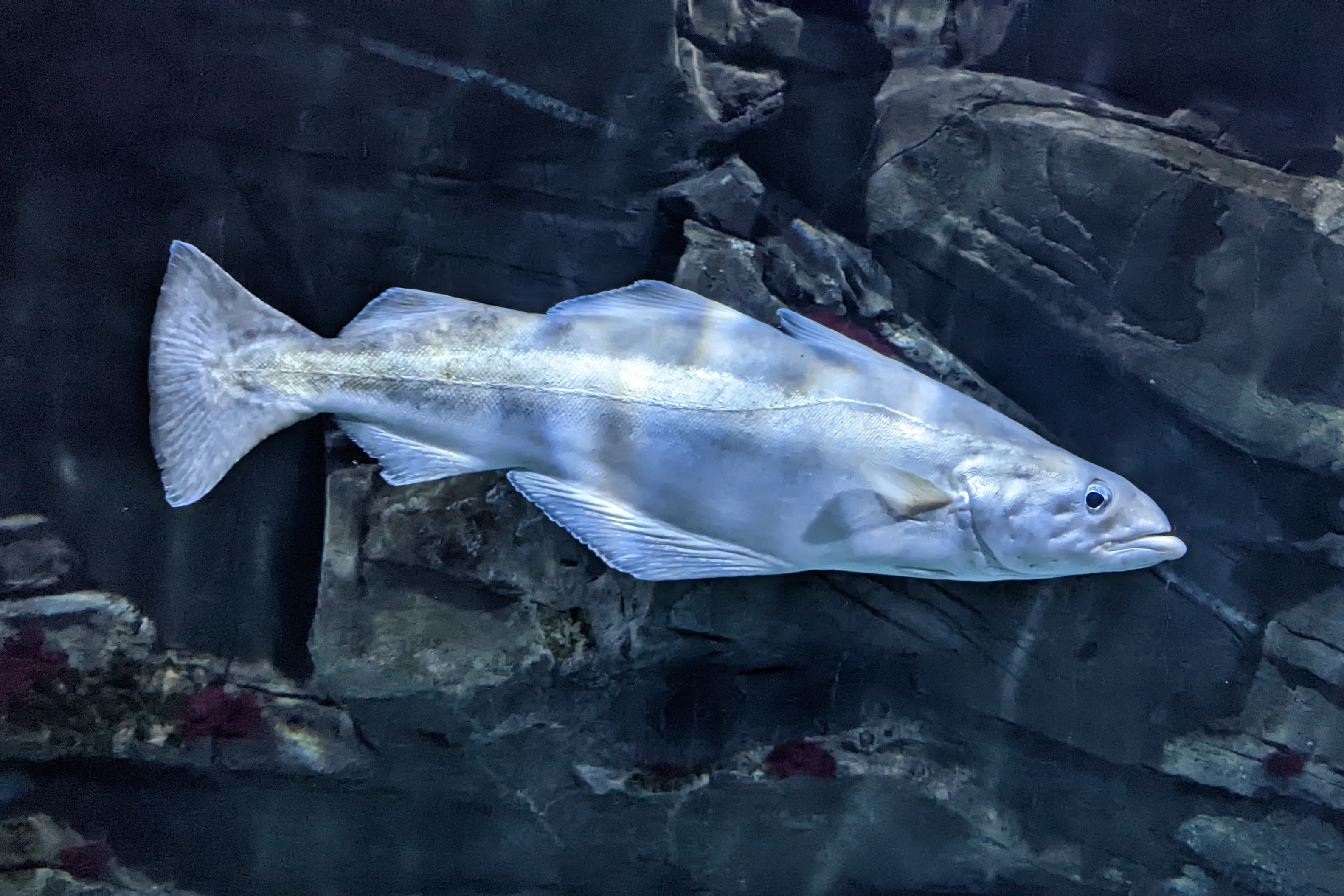
The honest, cheap substitute for cod — and often the more sustainable choice. Scottish line-caught pollock is one of the MCS's top recommendations. Milder than cod, holds together better than haddock, and costs half as much. Chefs love it; the public hasn't quite caught up yet.
At a glance
MSC-certified pollock from North Pacific is very sustainable. Scottish/North Sea pollock is recovering.
Best choice: MSC-certified pollock (Alaska pollock is the gold standard for sustainability)
Seasonality
Compare every Scottish species month by month in the seasonal seafood calendar.
Best quality: Winter months for best condition fish.
Best value: Very affordable year-round — one of the cheapest sustainable white fish.
Frozen: Excellent frozen. Widely sold as frozen fillets.
How to buy
- White, flaky flesh
- Mild smell
- Firm but springs back
Where to buy
Supermarkets: Very widely available — fresh, frozen, and processed.
How much to buy
Storage
Fridge: 2 days
Freezer: 4 months
How to prepare
Prep time: 5 minutes
Cooking methods
Pan-fry, bake, or steam — 3–4 minutes per side for fillets. Takes a wide variety of flavourings. Excellent in fish pie.
- Overcooking — pollock is lean and dries out
- Dismissing it as inferior to cod or haddock — the quality gap is small
Recipes
Baked pollock with herb crust
- Top fillets with breadcrumbs, parsley, and lemon zest. Bake 200°C for 15 minutes.
Pollock fish pie
- Classic Scottish fish pie with pollock, smoked haddock, and prawns under mash.
Drink pairings
Nutrition per 100g
It's an honest, hardworking fish rather than a showstopper. Use it anywhere you'd use cod and save money — few people can tell the difference in a pie or a batter. Buy MSC-certified for a clean conscience.
Pollock vs…
Frequently asked questions
Is pollock sustainable?
MSC-certified Alaskan pollock is one of the most sustainable fish you can eat. Scottish pollock is also generally well-managed. Look for the blue MSC logo.
How does it compare to cod?
Very similar. Pollock is leaner and slightly less sweet. In most preparations — fish pie, batter, baking — the difference is minimal. The price difference is significant.
When is pollock in season?
Peak season for Scottish pollock is November–February. Winter months for best condition fish.
How do you cook pollock?
You can pan-fry, bake, deep-fry or poach Scottish pollock.
How much does pollock cost per kg in the UK?
Fresh Scottish pollock typically costs £8–£15 per kg from a fishmonger, depending on size, season and how it's prepared. Per portion that works out around £2–4 per portion. Very affordable year-round — one of the cheapest sustainable white fish.
More species guides
Langoustine
Scotland’s most valuable seafood export — and, bafflingly, a product most Scots have never eaten. Also called Dublin Bay prawns, Norway lobster, or scampi in its cheapest incarnation. Fresh, whole langoustines landed on the west coast are one of the great seafood experiences in the world.
Cod (North Sea)
The backbone of Scottish fish and chips. North Sea cod has been through stock collapse and recovery cycles; look for MSC-certified Icelandic or Barents Sea if you’re unsure about provenance.
Scottish Salmon
Scotland’s most exported food product by value. Virtually all salmon you buy is farmed — wild Atlantic salmon is critically endangered and mostly reserved for catch-and-release sport fishing. Look for RSPCA Assured or organic labels for higher welfare.
Native Oyster
The traditional British native oyster is in season when there’s an ‘R’ in the month. Loch Ryan is the last commercially active native oyster bed in Scotland. Meatier, more metallic, and more characterful than the common Pacific rock oyster.
Mackerel
Cheap, sustainable when line-caught, and a brilliant introduction to oily fish cookery. Scottish line-caught mackerel in late summer is one of the best value food items in the country.
King Scallop
Hand-dived scallops from the west coast are one of Scotland’s premier luxuries. Much better than dredged, with zero seabed damage and notably plumper meat. Pay the extra.
Related articles
8 min read
Why Scottish Salmon Divides Opinion
Farmed salmon is Scotland's biggest food export and most controversial product. Environmentalists hate it, chefs love it. What's actually going on.
9 min read
The Scottish Seafood Export Paradox
Scotland exports 80% of its seafood — langoustines to Spain, salmon to France, scallops to China. Meanwhile, Scots eat frozen fish fingers. Here's why, and how to buy back in.
7 min read
How to Buy Fish from a Fishmonger: A Beginner's Guide
A no-judgement guide to walking into a fishmonger for the first time. What to ask, what to look for, how much to buy, and how not to get ripped off.
Some links on this page are affiliate links. TasteSCOT may earn a small commission at no extra cost to you. If you drink, please drink responsibly.