Scottish Lobster
Homarus gammarus
Last updated 16 May 2026
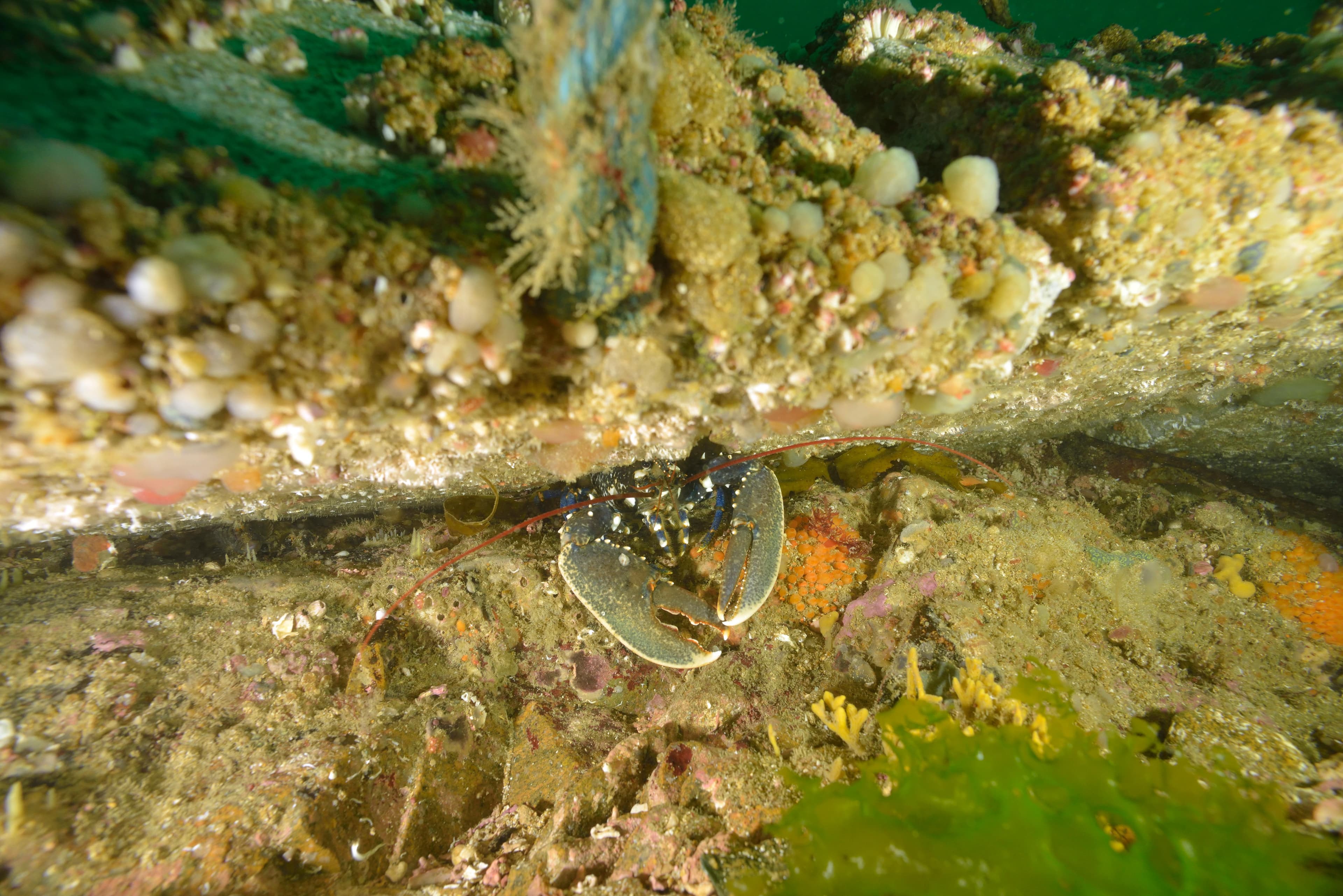
The European lobster is Scotland's most expensive wild-caught seafood and, when creel-caught responsibly, one of the most sustainable premium shellfish in the world. Distinctive dark blue in life — red only after cooking. Most Scottish lobster is exported live to Spain and France; buying locally is genuinely harder than it should be.
At a glance
Scottish lobster scores MCS 2 — a reasonable choice. Creel-caught is sustainable. The main concerns are over-fishing of certain inshore grounds and the V-notching scheme to protect breeding females.
Best choice: Live Scottish lobster from a local fishmonger or harbour. Look for "V-notched returned" certification where available.
Avoid: Avoid imported Canadian or American lobster (different species, large carbon footprint). Avoid lobster of unknown origin.
Seasonality
Compare every Scottish species month by month in the seasonal seafood calendar.
Best quality: Best quality July–August when lobsters are full and the warm-water meat is at its sweetest.
Best value: Cheapest July–August when supply is highest. Avoid winter — lobsters are leaner and prices spike.
Frozen: Frozen Scottish lobster tails are decent value off-season but the texture suffers. Live or freshly cooked is the only way to get the proper experience.
How to buy
- Live: vigorous tail flick when handled
- Live: clean, dark blue shell, no bleached patches
- Cooked: bright red shell, tightly curled tail
- Heavy for its size
- Sweet, oceanic smell
- Sluggish or unresponsive live lobsters
- Bleached or pale shell areas (post-moult, soft, watery meat)
- Loose or limp tails
- Pre-frozen lobster meat of unknown provenance
- Imported "lobster" that may be a different species
Fresh vs frozen: Live or freshly cooked is the only way to do lobster properly. Frozen tails are acceptable but the experience is dramatically diminished.
Where to buy
Supermarkets: Waitrose stocks cooked whole lobster (£20–30 each). Tesco and Sainsbury's occasionally stock cooked tails. Live lobster is a specialist purchase.
How much to buy
Tail meat is the prime cut. Claw meat is sweeter but more work. The body and legs contain small amounts of meat worth picking.
Storage
Fridge: Cooked: 2 days in the fridge. Live: cook same day. Picked meat: 24 hours.
Freezer: Tails freeze well for up to 3 months. Whole cooked lobster loses texture if frozen.
Thawing: Thaw in fridge overnight. Pat tail meat dry before cooking.
How to prepare
The most humane method is rapid spike through the head — between the eyes, with a heavy chef's knife or skewer. RSPCA guidance considers this preferable to boiling alive.
Either split lengthways for grilling, or boil whole. For boiling, plunge head-first into rolling salted water.
Twist the tail away from the head. Save the head and shell — they make exceptional bisque or stock.
Use the back of a heavy knife or claw crackers. Pick the meat in one piece if possible.
Cut along the back of the tail and remove the dark digestive tract. Optional but improves appearance.
- →Keep all the shells and head — they make the best bisque
- →A 700g lobster yields about 230g of meat — 30% by weight
- →Salt the boiling water generously — it should taste like the sea
Prep time: 10 minutes for a cooked whole lobster. Allow 30 minutes if cooking from live.
Cooking methods
Bring heavily salted water to a rolling boil. Plunge lobster head-first. Boil 12 minutes for 700g, 15 for 900g. Plunge into ice water immediately.
The classic, simplest method. Best flavour.
Split lengthways. Brush with garlic butter. Grill cut-side down for 4 minutes, flip, baste, grill 2–4 minutes more until meat firms.
BBQ and showy presentation.
Pre-cook lobster. Pick meat. Make a roux-based sauce with white wine, mustard, cream, and parmesan. Fold in lobster meat. Pile into the shell. Top with cheese and grill until golden.
Showpiece dinner-party dish.
Steam over heavily salted water for 14 minutes (700g) to 18 minutes (900g). Slightly more delicate result than boiling.
Most delicate result.
- Overcooking — past 15 minutes for a 700g lobster the meat goes rubbery.
- Boiling alive without the spike — both more humane and produces better meat.
- Discarding the shells — they make extraordinary bisque.
- Buying soft-shell post-moult lobsters — light, watery, less meat.
Recipes
Grilled Lobster with Garlic Butter
- · 1 medium lobster (about 800g, cooked)
- · 80g butter
- · 3 garlic cloves (minced)
- · Handful of parsley (chopped)
- · Juice of 1 lemon
- · Sea salt and black pepper
- Split the cooked lobster lengthways with a sharp knife.
- Melt butter with garlic over low heat for 2 minutes.
- Brush cut sides of lobster with garlic butter.
- Grill cut-side up under a hot grill for 4–5 minutes until heated through and the butter bubbles.
- Squeeze over lemon, scatter parsley, season generously.
For pre-cooked lobster, you're just heating through — don't over-grill or the meat dries.
Pairs with: White Burgundy or vintage Champagne
Lobster Roll (Scottish style)
- · Meat from 1 cooked lobster (about 230g)
- · 3 tbsp mayonnaise
- · 1 tbsp lemon juice
- · 2 tbsp finely chopped chives
- · 2 hot dog buns (split)
- · 30g butter
- · Sea salt and black pepper
- Roughly chop the lobster meat (keep some big chunks).
- Mix with mayo, lemon juice, chives, salt, and pepper.
- Butter the cut sides of the buns and toast in a hot pan until golden.
- Pile the lobster mix into the toasted buns.
- Serve immediately, with crisps.
Toast the buns in butter, not dry. The whole point.
Pairs with: Sancerre or a crisp Crémant
Serve with
Keep accompaniments simple. Lobster is the star — supporting cast should be gentle.
Drink pairings
Lobster's richness handles weightier wines than other shellfish — but stay unoaked or lightly oaked.
Nutrition per 100g
High protein, very low fat. Rich in selenium, zinc, and B12. Among the leanest premium proteins.
Allergen
Lobster is a crustacean shellfish — one of the 14 major UK allergens. Contains: Crustaceans. May share processing equipment with other shellfish at some suppliers. Allergen info varies by supplier — always confirm with your seller.
Scottish lobster is excellent but it's the most expensive shellfish you can buy. Langoustine offers 80% of the experience for 40% of the price. If you're budgeting for a special occasion and want the showpiece, lobster is genuinely good. For everyday luxury, langoustine and crab are far better value. The Scottish creel-caught lobster you'll buy live from Oban harbour is among the best in the world — the issue is price, not quality.
Scottish lobster has been creel-caught for over 150 years using essentially the same method. The V-notching conservation scheme — fishermen voluntarily V-notching breeding females and returning them — has helped sustain the fishery. Most Scottish lobster is exported to France and Spain; what's left for the UK market is limited.
- · Lobsters can live to 50+ years in the wild
- · They moult their shells throughout their life — and are vulnerable when soft-shelled
- · A lobster's blood is blue (haemocyanin) until cooked
- · V-notching protects breeding females — fishermen mark their tails and return them to the sea
Scottish Lobster vs…
Langoustines are sweeter and far cheaper — roughly 40% of the price for 80% of the experience. Lobster has more meat per animal but less complexity per gram.
Crab is denser, richer, and far better value per kg of meat. Lobster is the special-occasion choice; crab is the everyday luxury.
Frequently asked questions
When is lobster season in Scotland?
Scottish lobster season runs roughly April to October, with peak quality from June to September — that's when lobsters are full, the meat is at its sweetest, and supply is highest, which also makes mid-summer the best value (cheapest July–August). From November to March the lobsters are moulting: the meat is softer and less full, and not worth restaurant prices. For the best of it, buy live or freshly cooked in mid-summer rather than frozen off-season.
How do you cook a live lobster humanely?
The RSPCA-approved method is rapid spike through the head between the eyes, killing the lobster instantly before cooking. This is considered more humane than boiling alive. After spiking, boil or steam as normal.
How long do you cook a lobster?
12 minutes for a 700g lobster, 15 minutes for 900g, in heavily salted boiling water. Plunge into ice water immediately to stop cooking. Steaming takes 2–3 minutes longer.
How much lobster per person?
A 700g lobster per person as a main course. As a starter, half a lobster per person is generous. A 700g lobster yields about 230g of meat — 30% by weight.
Is Scottish lobster expensive?
Yes — £25–35 per medium lobster, around £55–65/kg whole. Roughly 2–3x langoustine prices for similar weight of meat. The Scottish creel-fishery and high export demand keep prices high.
What's the difference between Scottish and Canadian lobster?
Different species. Scottish/European lobster (Homarus gammarus) has a sweeter, finer flavour and dark blue shell. Canadian/American lobster (Homarus americanus) is larger, slightly coarser, and has a greenish shell. Canadian lobster is cheaper but has a much larger carbon footprint.
Where can I buy live lobster in Scotland?
Loch Fyne, Fish Brothers, and Eyemouth Seafoods online. In person: harbour-side fishmongers in Oban, Mallaig, Ullapool, and the Northeast often sell live straight from the boats.
What wine goes with lobster?
White Burgundy (Meursault), Champagne, Chablis. Lobster's richness handles weightier wines than other shellfish — but stay unoaked or lightly oaked.
How much does Scottish lobster cost per kg in the UK?
Fresh Scottish lobster typically costs £30–£60 per kg from a fishmonger, depending on size, season and how it's prepared. Per portion that works out around £25–35 per medium lobster (700–900g). Yields enough for one person or a generous starter for two.. Cheapest July–August when supply is highest. Avoid winter — lobsters are leaner and prices spike.
More species guides
Langoustine
Scotland’s most valuable seafood export — and, bafflingly, a product most Scots have never eaten. Also called Dublin Bay prawns, Norway lobster, or scampi in its cheapest incarnation. Fresh, whole langoustines landed on the west coast are one of the great seafood experiences in the world.
Cod (North Sea)
The backbone of Scottish fish and chips. North Sea cod has been through stock collapse and recovery cycles; look for MSC-certified Icelandic or Barents Sea if you’re unsure about provenance.
Scottish Salmon
Scotland’s most exported food product by value. Virtually all salmon you buy is farmed — wild Atlantic salmon is critically endangered and mostly reserved for catch-and-release sport fishing. Look for RSPCA Assured or organic labels for higher welfare.
Native Oyster
The traditional British native oyster is in season when there’s an ‘R’ in the month. Loch Ryan is the last commercially active native oyster bed in Scotland. Meatier, more metallic, and more characterful than the common Pacific rock oyster.
Mackerel
Cheap, sustainable when line-caught, and a brilliant introduction to oily fish cookery. Scottish line-caught mackerel in late summer is one of the best value food items in the country.
King Scallop
Hand-dived scallops from the west coast are one of Scotland’s premier luxuries. Much better than dredged, with zero seabed damage and notably plumper meat. Pay the extra.
Where to eat scottish lobster in Scotland
Whole West Coast lobster grilled in the shell with garlic butter, served over Loch Linnhe. The view alone justifies the price; the lobster justifies the rest.
Visit siteTheir own lobster from Loch Fyne — whole grilled or as a thermidor. Buy a live one from the shop on your way out.
Visit siteEast Neuk lobster on the tasting menu when available — Billy Boyter's elevated treatment of the shellfish landed metres from the door.
Visit siteLobster roll or half-lobster grilled — a cracking value option compared to the white-tablecloth crowd. Sit at the bar.
Visit siteEast coast lobster from Stonehaven creels — grilled whole or in a roll, depending on the day's landing.
Whole lobster from local creels in the glass-walled room over the West Sands. Special-occasion territory.
Visit siteRelated articles
6 min read
Langoustine vs Lobster: Taste, Price & Which to Buy
The honest answer: langoustines are sweeter, easier to eat and about half the price; lobster gives you more meat and the bigger occasion. Which to buy, when.
6 min read
Langoustine vs Prawn: Is a Langoustine a Prawn or Lobster?
A langoustine (Nephrops norvegicus) is not a prawn: it is a small clawed lobster, also sold as Norway lobster, Dublin Bay prawn or scampi. How they differ.
9 min read
The Scottish Seafood Export Paradox
Scotland exports 80% of its seafood — langoustines to Spain, salmon to France, scallops to China. Meanwhile, Scots eat frozen fish fingers. Here's why, and how to buy back in.
Some links on this page are affiliate links. TasteSCOT may earn a small commission at no extra cost to you. Scottish Lobster is a major allergen — see allergen advice above.If you drink, please drink responsibly.