Scottish Mussels
Mytilus edulis
Last updated 16 May 2026
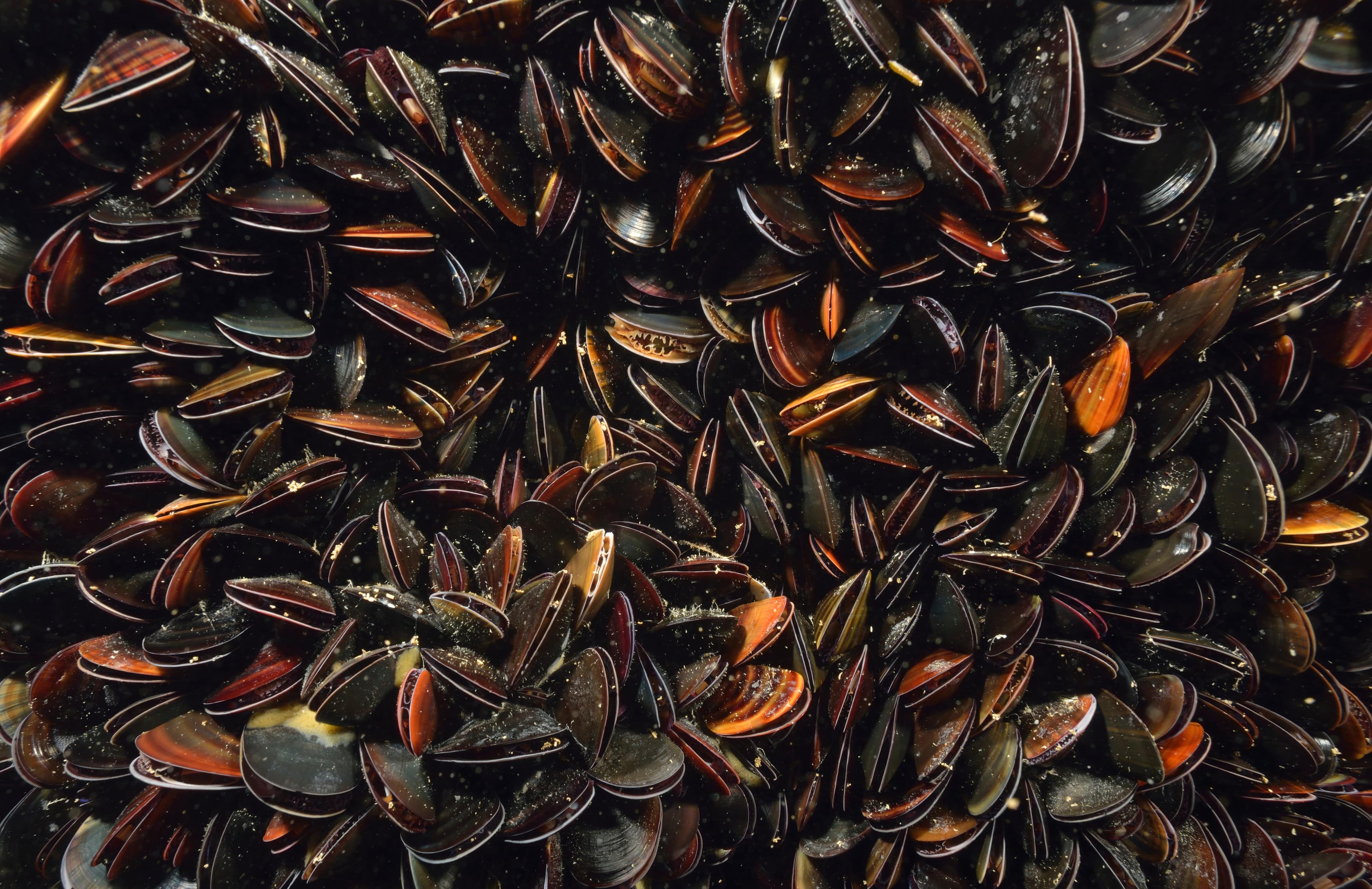
Rope-grown Scottish mussels — especially Shetland — are one of the most sustainable proteins on the planet. Zero feed, zero antibiotics, positive impact on water quality. Plump, sweet, and dramatically better than anything imported from the Netherlands. Peak quality during the 'R' months (September to April).
At a glance
Rope-grown mussels are MCS 1 — best choice. They're effectively a net-positive for the environment, filtering seawater as they grow. One of the most sustainable proteins available.
Best choice: Rope-grown Scottish mussels from Shetland or the West Coast lochs. The MCS gold standard.
Avoid: Wild-collected mussels of unclear origin (sand and water-quality concerns). Imported mussels with high carbon footprint.
Seasonality
Compare every Scottish species month by month in the seasonal seafood calendar.
Best quality: Best quality September–April when mussels are at their plumpest. Summer mussels (May–August) can be spawning and less full.
Best value: Mussels are cheap year-round. Rope-grown Scottish mussels are around £4–6/kg — among Scotland's best-value seafood.
Frozen: Frozen pre-cooked mussels are acceptable for stocks and curries but the texture suffers. Live mussels in the shell are dramatically better.
How to buy
- Shells tightly closed (or close when tapped)
- Heavy with seawater
- Fresh sea smell
- No broken shells
- Wet, clean appearance
- Open shells that don't close when tapped (dead — discard)
- Cracked or broken shells
- Sour or strong smell
- Pre-cooked frozen mussels for any dish where freshness matters
- Mussels of unknown origin
Fresh vs frozen: Fresh, live mussels are dramatically better than frozen. Pre-cooked frozen are fine for stews but lack the proper mussel experience.
Where to buy
Supermarkets: Excellent supermarket availability. Tesco, Sainsbury's, Waitrose, Morrisons all stock fresh rope-grown Scottish mussels at £4–6/kg.
How much to buy
Most of mussel weight is shell. 1kg of live mussels in shell yields about 250g of meat — but you eat the shells' broth and serve in shell. Buy by the kg.
Storage
Fridge: Cook on day of purchase or next day at the latest. Store in fridge wrapped in damp cloth, never in standing water (suffocates them).
Freezer: Cooked mussel meat freezes for 2–3 months. Don't freeze live raw mussels.
Thawing: Thaw in fridge overnight. Use immediately after thawing.
How to prepare
Rinse mussels in cold water. Discard any with broken shells. Tap any open shells — they should close. Discard any that don't.
Pull the wiry "beard" (byssus thread) sticking out of the shell. Pull towards the hinge to remove. Some rope-grown mussels are pre-debearded.
Mussels need a little liquid (wine, stock, water) to steam open. Cook covered for 3–4 minutes maximum.
Any mussel that hasn't opened after cooking was probably already dead — discard it.
- →Cook in two batches if your pan isn't big enough — overcrowding under-cooks the bottom mussels
- →The cooking liquor is the best part — always serve with bread or pasta to mop it up
- →Fresh mussels should sound hollow when tapped, not dull
Prep time: 5 minutes to clean a kg of mussels.
Cooking methods
Sauté shallots and garlic in butter. Add white wine. Bring to a boil. Add cleaned mussels. Cover, cook 3–4 minutes until shells open. Add cream and parsley. Serve with bread.
The classic. The right way to learn mussels.
Steam mussels in a wok or covered pan with garlic, ginger, lemongrass, coconut milk, and lime. 3–4 minutes until they open.
A different angle. Pairs with jasmine rice.
Steam mussels open. Reserve half-shell. Top with garlic butter and breadcrumbs. Grill 2 minutes until breadcrumbs golden.
Sharing platters and parties.
Cold-smoked mussels are a specialist preparation — Scottish Shetland-smoked mussels are widely sold pre-prepared.
Buying ready-made; Scottish smoked mussels are excellent on toast.
- Cooking too long — past 5 minutes the meat goes rubbery
- Skipping the close-shell check — eating dead mussels is a real food poisoning risk
- Not enough liquid — mussels need steam to open
- Throwing away the cooking broth — that's the best part
Recipes
Moules marinière
- · 1kg live mussels
- · 2 shallots (finely chopped)
- · 2 garlic cloves (minced)
- · 30g butter
- · 200ml dry white wine
- · 100ml double cream
- · Handful of parsley (chopped)
- · Crusty bread to serve
- · Sea salt and black pepper
- Clean and debeard mussels. Discard any that won't close.
- Sauté shallots and garlic in butter for 2 minutes.
- Add white wine, bring to a rolling boil.
- Add mussels, cover tightly, shake the pan once or twice. Cook 3–4 minutes until shells open.
- Add cream and parsley. Toss to combine.
- Discard any unopened mussels. Serve with bread to mop up the juices.
The crusty bread is essential. The broth is half the dish.
Pairs with: Muscadet (the canonical pairing)
Thai Coconut Mussels
- · 1kg live mussels
- · 400ml coconut milk
- · 2 garlic cloves (sliced)
- · 1 thumb ginger (grated)
- · 1 stick lemongrass (bruised)
- · 1 red chilli (chopped)
- · 2 tbsp fish sauce
- · Juice of 1 lime
- · Fresh coriander
- · Steamed rice to serve
- Clean and debeard mussels.
- In a wok or large pot, simmer coconut milk with garlic, ginger, lemongrass, and chilli for 5 minutes.
- Add mussels and fish sauce. Cover, cook 3–4 minutes until shells open.
- Add lime juice and coriander.
- Discard unopened mussels. Serve over rice with the broth.
Use full-fat coconut milk. Light coconut milk thins the broth.
Pairs with: Riesling or Gewürztraminer
Serve with
Bread is non-negotiable — the broth is half the dish.
Drink pairings
Mussels with white wine and bread is one of the great cheap luxuries of European cooking. Don't complicate it.
Nutrition per 100g
Excellent source of protein, omega-3, iron, and B12. One of the most nutritionally complete shellfish.
Allergen
Mussels are molluscs — one of the 14 major UK allergens. Contains: Molluscs. Discard any mussels that don't close when tapped before cooking, or that stay closed after cooking. Allergen info varies by supplier — always confirm with your seller.
Scottish rope-grown mussels are properly excellent and properly cheap. £5/kg for sustainable, fresh, delicious protein — there's no better-value seafood in Scotland. The only catch is that mussels divide people: some find the texture difficult, some find them perfect. If you've never tried fresh-from-the-rope mussels in a proper moules marinière, you owe yourself the experience. The Shetland and Mull producers are world-class.
Scotland produces nearly 7,000 tonnes of mussels per year — most of it from Shetland's vast aquaculture industry. Almost all are rope-grown, suspended on long lines in clean Scottish lochs. They filter seawater as they grow, producing both an excellent food product and a small environmental benefit.
- · A mussel can filter 25 litres of seawater per day
- · They produce a "byssus thread" (the beard) to attach themselves to ropes or rocks
- · Scotland produces almost 7,000 tonnes of mussels per year
- · The orange ones are female; the cream ones are male
Scottish Mussels vs…
Razor clams are larger and sweeter; mussels are smaller and more numerous. Mussels are cheaper and more available; razor clams are the connoisseur choice.
Different experience. Oysters are eaten raw; mussels cooked. Mussels far cheaper but never approach the experience of a properly shucked native oyster.
Frequently asked questions
How long do you cook mussels?
3–4 minutes maximum. Once the shells open, they're done. Past 5 minutes the meat goes rubbery.
How do you know if a mussel is dead?
Tap any open shell — a live mussel will close. If it doesn't close, it's dead. Discard. After cooking, discard any mussel that hasn't opened.
Should I debeard mussels?
Yes — pull the wiry beard sticking out of the shell. Some rope-grown mussels are pre-debearded; check the bag.
How many mussels per person?
500–600g of live mussels per person as a main course (about 25–30 mussels). 300–400g as a starter.
Are Scottish mussels sustainable?
Rope-grown Scottish mussels score MCS 1 — best choice. They're effectively net-positive for the environment, filtering seawater as they grow. One of the most sustainable proteins available.
What's the difference between rope-grown and wild mussels?
Rope-grown mussels are cultivated on long lines in clean lochs — cleaner, easier to clean, and more consistent in size. Wild mussels are collected from rocks or seabed — need more thorough cleaning, more variable. Rope-grown is the standard now.
How much does scottish mussels cost per kg in the UK?
Fresh Scottish mussels typically costs £4–£10 per kg from a fishmonger, depending on size, season and how it's prepared. Per portion that works out around £4–6 per kg of live mussels. About £3–4 per person as a main course (1kg feeds 2 generously).. Mussels are cheap year-round. Rope-grown Scottish mussels are around £4–6/kg — among Scotland's best-value seafood.
More species guides
Langoustine
Scotland’s most valuable seafood export — and, bafflingly, a product most Scots have never eaten. Also called Dublin Bay prawns, Norway lobster, or scampi in its cheapest incarnation. Fresh, whole langoustines landed on the west coast are one of the great seafood experiences in the world.
Cod (North Sea)
The backbone of Scottish fish and chips. North Sea cod has been through stock collapse and recovery cycles; look for MSC-certified Icelandic or Barents Sea if you’re unsure about provenance.
Scottish Salmon
Scotland’s most exported food product by value. Virtually all salmon you buy is farmed — wild Atlantic salmon is critically endangered and mostly reserved for catch-and-release sport fishing. Look for RSPCA Assured or organic labels for higher welfare.
Native Oyster
The traditional British native oyster is in season when there’s an ‘R’ in the month. Loch Ryan is the last commercially active native oyster bed in Scotland. Meatier, more metallic, and more characterful than the common Pacific rock oyster.
Mackerel
Cheap, sustainable when line-caught, and a brilliant introduction to oily fish cookery. Scottish line-caught mackerel in late summer is one of the best value food items in the country.
King Scallop
Hand-dived scallops from the west coast are one of Scotland’s premier luxuries. Much better than dredged, with zero seabed damage and notably plumper meat. Pay the extra.
Where to eat scottish mussels in Scotland
Co-owned by Scottish shellfish farmers — kilo pots of Shetland and West Coast mussels in classic marinière, Thai or smoked-haddock-cream broths. The Scottish mussel destination.
Visit siteSister to the Edinburgh original — same model: kilo pots of farmer-direct Scottish mussels with bread for mopping. Central Glasgow location.
Visit siteMoules marinière at the bar with a glass of muscadet — the classic combo done properly. Sit at the bar.
Visit siteMussels from the loch, often steamed in white wine. Buy a kilo from the shop to take home.
Visit siteMussels and chips, mussel pots, mussel chowder — casual takeaway-style West Coast eating without the white-tablecloth markup.
Related articles
6 min read
Langoustine vs Lobster: Taste, Price & Which to Buy
The honest answer: langoustines are sweeter, easier to eat and about half the price; lobster gives you more meat and the bigger occasion. Which to buy, when.
8 min read
Why Scottish Salmon Divides Opinion
Farmed salmon is Scotland's biggest food export and most controversial product. Environmentalists hate it, chefs love it. What's actually going on.
9 min read
The Scottish Seafood Export Paradox
Scotland exports 80% of its seafood — langoustines to Spain, salmon to France, scallops to China. Meanwhile, Scots eat frozen fish fingers. Here's why, and how to buy back in.
Some links on this page are affiliate links. TasteSCOT may earn a small commission at no extra cost to you. Scottish Mussels is a major allergen — see allergen advice above.If you drink, please drink responsibly.