Razor Clams
Ensis siliqua
Last updated 16 May 2026
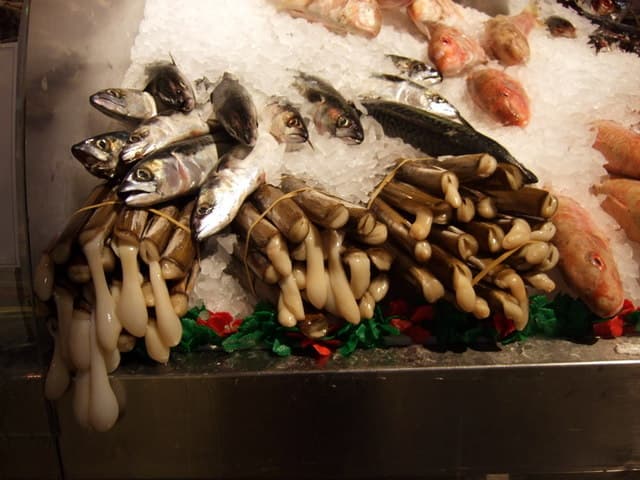
Scotland's most underrated shellfish — sweet, firm, and cheap relative to scallops, but almost impossible to find in supermarkets. Most hand-harvested razor clams are exported to Spain, where they're a restaurant staple. Look for hand-dived or diver-caught for the best product and best sustainability credentials.
At a glance
MCS rating varies by region. Hand-collected razor clams from the West Coast are MCS 1–2 (best choice). Be wary of clams of unclear origin — illegal electrofishing remains a problem in some Scottish waters.
Best choice: Hand-collected from a registered Scottish supplier. Small-scale, mostly West Coast.
Avoid: Avoid imported razor clams of uncertain origin. The species is widely fished worldwide with very different sustainability standards.
Seasonality
Compare every Scottish species month by month in the seasonal seafood calendar.
Best quality: Best quality October–February in cold months when the clams are fattest. Winter clams are notably better than summer ones.
Best value: Cheapest in winter when supply peaks. Increasingly hard to find in summer when fishing slows.
Frozen: Frozen is acceptable but the texture suffers — the meat goes slightly rubbery. Fresh is dramatically better.
How to buy
- Live: foot extends and retracts when you tap the shell
- Live: tightly closed when at rest
- Fresh sea smell
- No discoloration on the shell or meat
- Plump, opaque meat (not shrunken or grey)
- Live razor clams that don't respond to tapping (dead — discard)
- Open shells that don't close when handled
- Discoloured or sand-filled meat
- Clams of unclear origin (electrofishing concerns)
- Pre-cooked razor clams sitting in liquid
Fresh vs frozen: Fresh, live razor clams are far superior to frozen. Cooked-and-frozen are acceptable but the texture suffers.
Where to buy
Supermarkets: Almost never available in supermarkets. Specialist fishmongers and online suppliers are the only realistic source.
How much to buy
About 50% of whole weight is edible meat — better yield than most shellfish. The meat extends along the entire length of the shell.
Storage
Fridge: Cook on day of purchase or next day at the latest. Store in fridge wrapped in damp cloth.
Freezer: Frozen cooked meat keeps 2–3 months. Freezing live raw clams is not recommended.
Thawing: Thaw in fridge overnight if frozen. Use immediately after thawing.
How to prepare
Soak live razor clams in heavily salted cold water for 30 minutes. They will spit out sand. Repeat with fresh water if very gritty.
Tap the shell — live clams retract their foot or close. Discard any that stay open or unresponsive.
Razor clams cook in 60–90 seconds. They open dramatically when ready. Stop cooking the moment they open.
After cooking, remove the dark digestive tract from the meat. The clean white meat is what you eat.
- →Always purge sand — undermining your meal otherwise
- →Cook in batches if your pan isn't large enough — overcrowding steams them
- →Keep the shells — they make great serving vessels
Prep time: 30 minutes purging plus 5 minutes prep before cooking.
Cooking methods
Heat a large pan with garlic butter. Add razor clams hinge-down. Cover briefly. They open in 60–90 seconds. Remove immediately, drizzle with parsley, lemon, more butter.
The classic Scottish way. Maximum simplicity, maximum flavour.
Place razor clams under a hot grill. They open in 3–4 minutes. Brush with garlic butter and breadcrumbs once open. A further 1 minute under the grill until breadcrumbs golden.
BBQ and presentation.
Steam over boiling water until they open (2–3 minutes). Most delicate result. Serve with melted butter and lemon.
Showcasing the natural sweetness.
- Not purging sand — the single biggest reason home-cooked razor clams disappoint
- Overcooking — they need 60–90 seconds. Past 2 minutes they go rubbery.
- Cooking dead clams — always check responsiveness before cooking
- Eating the dark gut — remove it after cooking
Recipes
Pan-fried Razor Clams with Garlic and Parsley
- · 8–10 live razor clams
- · 60g butter
- · 3 garlic cloves (minced)
- · Handful of parsley (chopped)
- · Juice of 1 lemon
- · Crusty bread to serve
- · Sea salt and black pepper
- Soak razor clams in heavily salted water for 30 minutes to purge sand.
- Discard any clams that don't close when tapped.
- Heat a large pan over high heat. Add butter and garlic.
- Add razor clams hinge-down. They will open in 60–90 seconds.
- Remove from pan immediately. Drizzle with parsley, lemon juice, and remaining butter.
- Serve with crusty bread to mop up the juices.
Don't overcook. The moment they open, they're done. The juices in the pan are the best part — bread to mop them up is essential.
Pairs with: Albariño or Picpoul
Razor Clams with Chorizo and White Wine
- · 8 live razor clams
- · 100g chorizo (diced small)
- · 1 garlic clove (minced)
- · 100ml dry white wine
- · Handful of parsley
- · Olive oil
- · Sea salt
- Purge razor clams in salted water for 30 minutes.
- Cook chorizo in a hot pan until crisp and the orange oil renders out.
- Add garlic, cook 30 seconds.
- Add wine and bring to a simmer.
- Add razor clams. Cover. Cook until shells open (60–90 seconds).
- Scatter parsley, drizzle olive oil, serve with bread.
Spanish-style. The chorizo oil is the foundation of the dish.
Pairs with: Albariño
Serve with
The pan juices are the best part — always serve with bread to mop them up.
Drink pairings
Razor clams have a delicate sweetness — keep wines crisp and light.
Nutrition per 100g
High protein, low fat. Rich in iron, manganese, and B12. Slightly higher in salt than other shellfish.
Allergen
Razor clams are molluscs — one of the 14 major UK allergens. Contains: Molluscs. Overcook them by even 30 seconds and they become rubber bands — set them on a hot pan briefly, then off. Allergen info varies by supplier — always confirm with your seller.
Razor clams are Scotland's most underrated shellfish. They're cheap (£10–12/kg), they cook in 90 seconds, and they're genuinely as flavourful as anything you'll eat. The texture is the main barrier — some people find them slightly chewy — but the sweetness is extraordinary. Most Scottish supermarkets don't even stock them, which keeps prices low for those who know to ask. Buy from a specialist, purge the sand, cook for 90 seconds, and you have a dinner that tastes like the West Coast.
Razor clam fishing has a contentious history in Scotland. Electrofishing — using electricity to make the clams jump out of the sand — is now heavily restricted after years of unregulated activity damaged Scottish seabeds. Hand-collection on a low-tide beach using salt is the traditional and now standard method. The clams jump from the sand when salt is poured into the keyhole.
- · A razor clam can dig itself into the sand at over 30cm per second
- · They are also called "spoots" in Scotland — from the spurt of water they spray when surprised
- · The shell is shaped like an old straight-razor — hence the name
- · Scotland produces most of the UK's razor clam catch
Razor Clams vs…
Mussels are smaller, denser, and more numerous per kg. Razor clams are larger, sweeter, and more dramatic in presentation. Both cook in 60–90 seconds.
Oysters are eaten raw; razor clams cooked. Different experiences entirely. Razor clams are far better value per portion.
Frequently asked questions
How do you purge sand from razor clams?
Soak live razor clams in heavily salted cold water for 30 minutes. They will spit out the sand. Repeat with fresh water if they're still gritty. This step is non-negotiable — un-purged clams ruin the meal.
Can you forage razor clams legally in Scotland?
Yes, hand-collection by individuals (using salt) is legal for personal consumption. Commercial razor clam fishing is heavily regulated. Electrofishing is restricted/banned. Always check local regulations before foraging.
How long do you cook razor clams?
Just 60–90 seconds. They open dramatically when ready. The moment they open, they're done. Past 2 minutes they go rubbery.
What do razor clams taste like?
Sweet, slightly briny, with a meaty texture firmer than mussels but softer than scallops. The flavour is delicate — closer to scallop than to clam in the chowder sense.
Are razor clams sustainable?
Hand-collected razor clams from registered Scottish suppliers are MCS 1–2 (best choice). Be wary of clams of unclear origin — illegal electrofishing has caused real environmental damage in Scotland.
Where can I buy razor clams in Scotland?
Online from Loch Fyne, Fish Brothers, or The Puffer. Specialist fishmongers in Oban, Mallaig, and Edinburgh sometimes stock them. Almost never available in supermarkets.
How much does razor clams cost per kg in the UK?
Fresh Scottish razor clams typically costs £15–£30 per kg from a fishmonger, depending on size, season and how it's prepared. Per portion that works out around £8–12 per kg (live, in shell). About £4–6 per person as a starter.. Cheapest in winter when supply peaks. Increasingly hard to find in summer when fishing slows.
More species guides
Langoustine
Scotland’s most valuable seafood export — and, bafflingly, a product most Scots have never eaten. Also called Dublin Bay prawns, Norway lobster, or scampi in its cheapest incarnation. Fresh, whole langoustines landed on the west coast are one of the great seafood experiences in the world.
Cod (North Sea)
The backbone of Scottish fish and chips. North Sea cod has been through stock collapse and recovery cycles; look for MSC-certified Icelandic or Barents Sea if you’re unsure about provenance.
Scottish Salmon
Scotland’s most exported food product by value. Virtually all salmon you buy is farmed — wild Atlantic salmon is critically endangered and mostly reserved for catch-and-release sport fishing. Look for RSPCA Assured or organic labels for higher welfare.
Native Oyster
The traditional British native oyster is in season when there’s an ‘R’ in the month. Loch Ryan is the last commercially active native oyster bed in Scotland. Meatier, more metallic, and more characterful than the common Pacific rock oyster.
Mackerel
Cheap, sustainable when line-caught, and a brilliant introduction to oily fish cookery. Scottish line-caught mackerel in late summer is one of the best value food items in the country.
King Scallop
Hand-dived scallops from the west coast are one of Scotland’s premier luxuries. Much better than dredged, with zero seabed damage and notably plumper meat. Pay the extra.
Where to eat razor clams in Scotland
Razor clams as a starter — usually grilled with garlic butter, sometimes with chorizo. Roy Brett's crustacean bar is the best seat for them.
Visit siteWhen razors appear on Billy Boyter's tasting menu, they get the elevated treatment — usually paired with cured pork or sea herbs.
Visit siteSkye razor clams (locally 'spoots') from divers — grilled briefly and served with seaweed butter. One of the West Coast's most distinctive seafood preparations.
Visit siteRazor clams as a daily special — grilled with parsley butter or with chorizo. Check the blackboard.
Visit sitePam Brunton sources razors from Loch Fyne divers and cooks them over fire when in season. Worth the drive up the loch.
Visit siteRelated articles
7 min read
10 Scottish Fish You Should Be Eating (But Probably Aren't)
Beyond salmon and haddock, Scotland's waters produce extraordinary fish that most Scots have never cooked. Here are 10 underrated species, where to buy them, and what to do with them.
7 min read
The Best Scottish Seafood Delivery Services: A Buying Guide
Scotland exports most of its best seafood. How to get langoustines, scallops and fresh fish delivered to your door — the suppliers who ship direct.
7 min read
How to Buy Fish from a Fishmonger: A Beginner's Guide
A no-judgement guide to walking into a fishmonger for the first time. What to ask, what to look for, how much to buy, and how not to get ripped off.
Some links on this page are affiliate links. TasteSCOT may earn a small commission at no extra cost to you. Razor Clams is a major allergen — see allergen advice above.If you drink, please drink responsibly.